
Philosophy is the art of questioning everything we think we know, challenging our assumptions, and seeking deeper truths that lie beneath the surface of everyday existence. In a world that moves at breakneck speed, where answers are expected instantly and contemplation is often sacrificed for productivity, philosophical wisdom offers us permission to pause, reflect, and engage with life’s most profound questions. These timeless insights from history’s greatest thinkers provide frameworks for understanding ourselves, our relationships, and our place in the vast tapestry of existence.
Whether you’re a student grappling with existential questions, a professional seeking meaning beyond career achievements, or simply someone who lies awake at night wondering about consciousness, morality, and the nature of reality, philosophy speaks directly to the human condition.
In 2026, as artificial intelligence reshapes society and technology blurs the boundaries between virtual and real, philosophical inquiry becomes more essential than ever for maintaining our humanity and ethical grounding. From ancient Stoic principles that teach emotional resilience to modern existentialist insights about freedom and responsibility, this collection offers diverse perspectives that can transform how you think, live, and navigate the complexities of contemporary existence.
Ancient Wisdom and Classical Philosophy
The unexamined life is not worth living, for without reflection we merely exist rather than truly experience the richness of human consciousness.
I know that I know nothing, and in that recognition lies the beginning of true wisdom and the humility necessary for genuine learning.
Man is the measure of all things, yet he often forgets that his measurements are subjective creations rather than objective truths.
The only true wisdom is in knowing you know nothing, which frees you from the prison of false certainty and opens doors to endless discovery.
We are what we repeatedly do; excellence, then, is not an act but a habit cultivated through conscious choice and daily practice.
The life which is unexamined is not worth living, because self-awareness distinguishes humans from creatures who merely react to stimuli.
He who knows others is wise, but he who knows himself is enlightened, for self-knowledge is the foundation of all understanding.
The whole is greater than the sum of its parts, a principle that applies to communities, ideas, and the mysterious nature of consciousness itself.
No man ever steps in the same river twice, for it’s not the same river and he’s not the same man, constantly flowing and changing.
The greatest wealth is to live content with little, finding richness not in possessions but in appreciation and inner peace.
Existentialism and the Search for Meaning
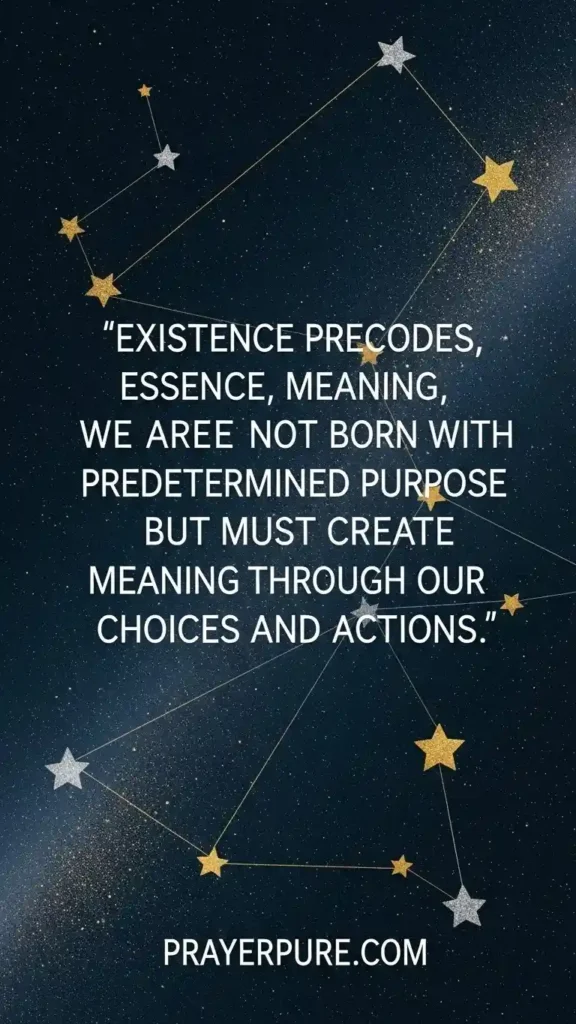
Existence precedes essence, meaning we are not born with predetermined purpose but must create meaning through our choices and actions.
Man is condemned to be free, bearing the weight of responsibility for every decision without the comfort of predetermined destiny.
Hell is other people, not because humans are inherently evil, but because others’ perceptions can imprison us in identities we didn’t choose.
Life has no meaning the moment you lose the illusion of being eternal, so we must create significance in our finite existence.
The absurd is born of the confrontation between human need for meaning and the unreasonable silence of the world that offers none.
We must imagine Sisyphus happy, finding joy not in achieving the summit but in the struggle itself and the choice to continue.
Freedom is what you do with what’s been done to you, transforming circumstances through the power of perspective and response.
Anxiety is the dizziness of freedom, the vertigo we feel when confronted with infinite possibility and the responsibility to choose.
To exist is to change, to change is to mature, to mature is to go on creating oneself endlessly through conscious evolution.
The individual has always had to struggle to keep from being overwhelmed by the tribe, preserving authentic selfhood against conformity’s pull.
Ethics, Morality, and the Good Life
Happiness is not something ready made but comes from your own actions, intentions, and the cultivation of virtuous character.
The only thing necessary for the triumph of evil is for good people to do nothing, making inaction itself a moral choice.
Act only according to that maxim whereby you can will that it should become a universal law applicable to all humanity.
The measure of a person’s character is what they would do if they knew they would never be caught or face consequences.
It is not enough to have a good mind; the main thing is to use it well in service of truth and human flourishing.
The function of education is to teach one to think intensively and to think critically, developing both intelligence and character together.
We make a living by what we get, but we make a life by what we give to others and the world around us.
The highest good and the greatest happiness is found not in pleasure but in virtuous activity and the excellence of the soul.
Do not do to others what you do not want done to yourself, a simple principle that contains profound ethical wisdom.
The quality of mercy is not strained but falls like gentle rain, enriching both the giver and receiver in its expression.
Knowledge, Truth, and Epistemology
All I know is that I do not know anything, and that recognition is the beginning of the philosophical journey toward understanding.
The truth is rarely pure and never simple, existing in shades of complexity that resist our desire for clear absolutes.
There are no facts, only interpretations, each filtered through the lens of individual perception and cultural conditioning.
Knowledge speaks, but wisdom listens, understanding that truth often emerges from silence and careful attention rather than assertion.
The eye sees only what the mind is prepared to comprehend, making perception itself an act of creative interpretation.
We don’t see things as they are but as we are, projecting our inner world onto external reality through unavoidable bias.
A little knowledge is a dangerous thing, breeding false confidence while true wisdom requires humility and continuous learning.
The map is not the territory, reminding us that our mental models are representations rather than reality itself.
Truth is stranger than fiction because fiction must make sense while reality operates under no such obligation.
To know that we know what we know, and to know that we do not know what we do not know, that is true knowledge.
Mind, Consciousness, and Self
I think, therefore I am, establishing consciousness as the one certainty in a world where everything else can be doubted.
The mind is everything; what you think you become, shaping reality through the creative and destructive power of thought.
We are not bodies that have souls but souls that have bodies, temporary vessels for eternal consciousness.
Consciousness is the last great mystery of science, the subjective experience that cannot be reduced to neural firing patterns.
The self is an illusion maintained by narrative continuity, a story we tell ourselves to create coherence from chaos.
Your mind is a garden; your thoughts are the seeds, and you can grow flowers or you can grow weeds through attention.
The unconscious mind drives behavior far more than we’d like to admit, operating beneath awareness’s surface like an iceberg.
Who looks outside dreams, but who looks inside awakens to the deeper truths that external searching cannot reveal.
The only journey is the journey within, because external exploration without self-knowledge leads nowhere meaningful.
Man is not disturbed by things but by the views he takes of them, making perception the source of suffering or peace.
Time, Change, and Impermanence
Time is an illusion created by human consciousness to make sense of sequential experience in an eternal present moment.
The only constant in life is change, making resistance futile and acceptance the path to peace and adaptation.
You cannot step into the same river twice because both you and the river are constantly flowing and transforming.
The past is a memory, the future is a projection, and the present is all that truly exists in experiential reality.
Time you enjoy wasting is not wasted time, challenging productivity culture’s relentless demand for utilitarian purpose.
Yesterday is history, tomorrow is a mystery, but today is a gift which is why we call it the present moment.
Change is the law of life, and those who look only to the past or present are certain to miss the future.
Impermanence is the only permanence, a paradox that captures the fundamental nature of existence and experience.
Life is a series of natural and spontaneous changes; resistance creates sorrow while flowing with change creates harmony.
The secret of change is to focus all your energy not on fighting the old but on building the new reality.
Reality, Perception, and Illusion
Reality is merely an illusion, albeit a very persistent one that we collectively agree to treat as solid and unchanging.
We live in a world of our own making, constructing reality through language, culture, and shared assumptions about existence.
The cave allegory reminds us that most people mistake shadows on the wall for reality, never turning to see the light.
Perception is reality in the subjective world where we each live, making your experience as valid as objective measurements.
What we call reality is an agreement that people have arrived at to make life more livable and comprehensible.
The world is but a canvas to the imagination, and we are all artists painting our version of existence.
Nothing is either good or bad but thinking makes it so, revealing judgment as the creator of value rather than discovering it.
All that we see or seem is but a dream within a dream, layering illusion upon illusion in infinite regression.
The distinction between past, present, and future is only a stubbornly persistent illusion created by human consciousness.
You are not a drop in the ocean but the entire ocean in a drop, containing infinity within finite form.
Political Philosophy and Society
The price of freedom is eternal vigilance against the encroachment of tyranny in both obvious and subtle forms.
The state exists to serve the people, not the reverse, and government legitimacy flows from the consent of the governed.
Justice is the advantage of the stronger, a cynical view that challenges us to prove otherwise through moral action.
Man is born free but everywhere he is in chains, bound by social contracts, expectations, and institutions of his own creation.
The society that separates its scholars from its warriors will have its thinking done by cowards and fighting by fools.
Democracy is the worst form of government except for all the others that have been tried throughout human history.
The test of our progress is not whether we add more abundance to those who have much but whether we provide enough to those who have little.
No one is free when others are oppressed, because liberation must be collective rather than individual to be meaningful and sustainable.
The philosophers have only interpreted the world; the point, however, is to change it through action rather than mere contemplation.
The function of liberty is to free someone else, not merely to secure our own comfort but to extend dignity to all.
Love, Beauty, and Aesthetics
Love is composed of a single soul inhabiting two bodies, a mystical union that transcends individual boundaries.
Beauty is truth, truth beauty; that is all we know on earth and all we need to know about ultimate values.
We love the things we love for what they are, not for what we wish them to be or what they might become.
The beauty of a person is seen in their eyes because the eyes are the gateway to the soul within.
Love is not love which alters when it alteration finds, remaining constant through change and adversity.
To love is to recognize yourself in another, seeing the shared humanity that connects all beings beneath surface differences.
Beauty is not in the face; beauty is a light in the heart that illuminates everything it touches with grace.
The meeting of two personalities is like the contact of two chemical substances; if there is any reaction, both are transformed.
Art is the lie that enables us to realize the truth, presenting fictional representations that reveal authentic insights.
Where there is love there is life, because love is the animating force that gives meaning to mere existence.
Wisdom for Modern Living
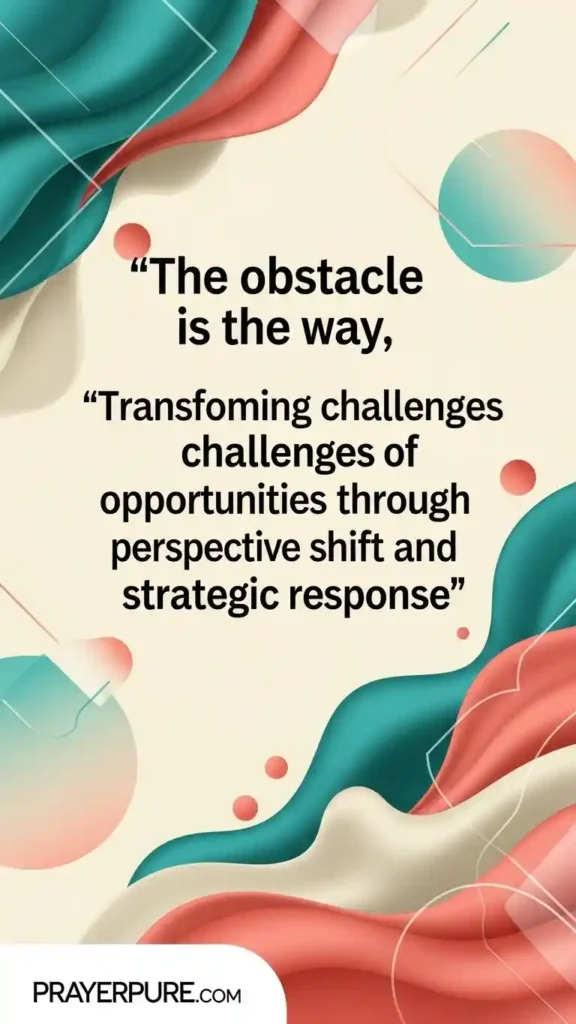
The obstacle is the way, transforming challenges into opportunities through perspective shift and strategic response.
You have power over your mind, not outside events; realize this and you will find strength in any circumstance.
Waste no more time arguing what a good person should be but actually become one through consistent virtuous action.
The best revenge is to be unlike those who performed the injury, rising above pettiness through exemplary character.
When you arise in the morning, think of what a precious privilege it is to be alive, to breathe, to think, to enjoy.
It is not the man who has too little but the man who craves more who is truly poor in spirit and satisfaction.
Very little is needed to make a happy life; it is all within yourself in your way of thinking and being.
He who lives in harmony with himself lives in harmony with the universe, finding peace through internal alignment.
The happiness of your life depends upon the quality of your thoughts, making mindset the foundation of wellbeing.
Begin at once to live and count each separate day as a separate life, fully present rather than postponing existence.
Conclusion
Philosophy quotes are far more than intellectual ornaments or impressive-sounding statements to share on social media—they are invitations to deeper thinking, catalysts for personal transformation, and tools for navigating life’s most challenging questions. Throughout history, philosophers have grappled with timeless issues of meaning, morality, knowledge, and existence, distilling complex ideas into memorable expressions that speak across centuries to our contemporary struggles and aspiration
s. These 110 philosophy quotes represent diverse traditions, perspectives, and approaches to the fundamental questions that define the human experience, offering wisdom that remains strikingly relevant in our modern context. Whether confronting ethical dilemmas, seeking purpose in an increasingly complex world, or simply trying to understand yourself more deeply, philosophical thinking provides frameworks and insights that can illuminate your path forward and enrich your understanding of what it means to be human in the twenty-first century.
The practical applications of philosophical wisdom extend far beyond academic discussion into every aspect of daily life, from decision-making and relationship dynamics to career choices and spiritual development. Use these quotes as journal prompts for self-reflection, conversation starters for meaningful discussions with friends and family, or guiding principles when facing difficult choices that test your values.

Olivia Lane is a devoted Christian writer and faith blogger at PrayerPure.com, where she shares heartfelt prayers, Bible verses, and spiritual reflections to inspire believers around the world. Her gentle words help readers find peace, purpose, and strength in God’s presence every day. When she’s not writing, Olivia enjoys reading devotionals, spending time outdoors, and connecting with her church community.