
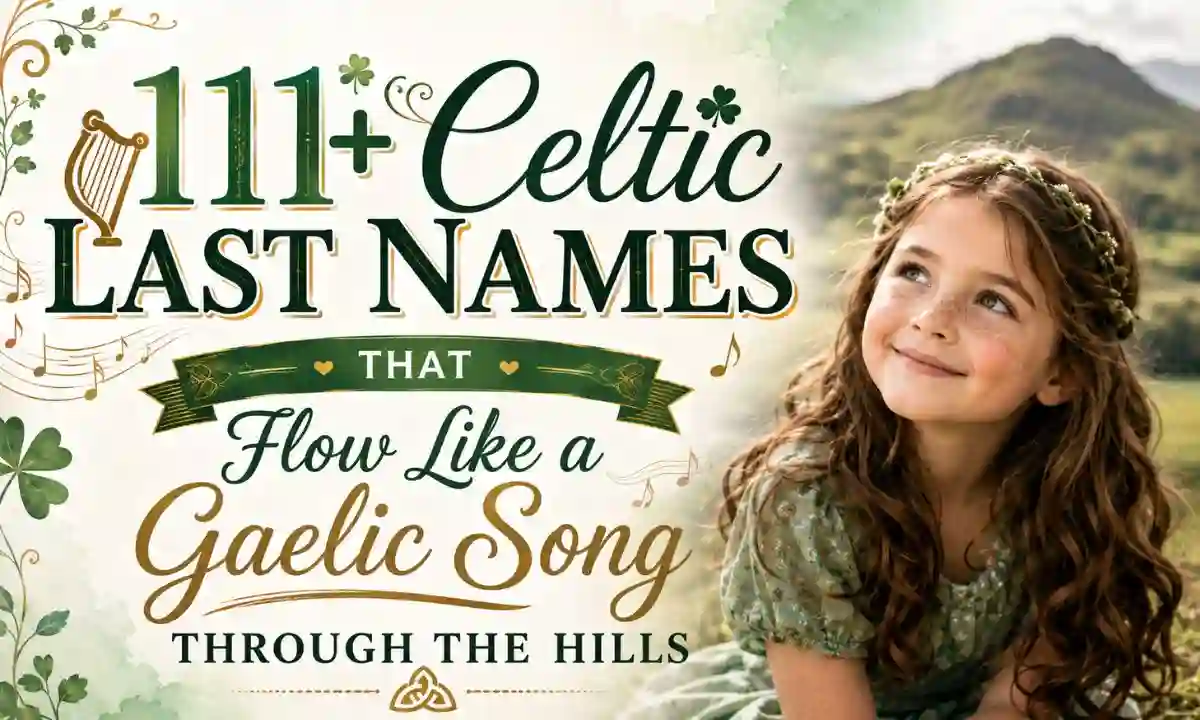
Celtic surnames carry a specific music that you recognize before you understand it. The O’Brien and the MacDonald and the ap Gruffudd and the Ó Murchadha — each of these names has a sound that speaks of hills and rain and ancient genealogies maintained across a thousand years of political pressure, military defeat, and cultural suppression. The music is partly phonological — the characteristic sounds of Irish, Scottish Gaelic, Welsh, Cornish, and Breton languages that no amount of Anglicization has entirely erased. But the music is also historical — the sound of names that survived because the people who bore them refused to let them die.
Celtic surnames are not simply old names. They are the record of a specific struggle — the struggle of Celtic peoples across the western and northern edges of Europe to maintain their linguistic and cultural identity against successive waves of Roman, Anglo-Saxon, Norman, and English pressure. When an Irish family maintains the Ó prefix rather than adopting the anglicized O’ — when they insist on Ó Briain rather than O’Brien — they are making a statement about whose language they live in. When a Welsh family maintains ap or ab rather than adopting the P- surnames that English administrators preferred — the ap Rhys becoming Price, the ap Howell becoming Powell — they record in their own surname the mechanism by which Celtic names were assimilated into the English naming system.
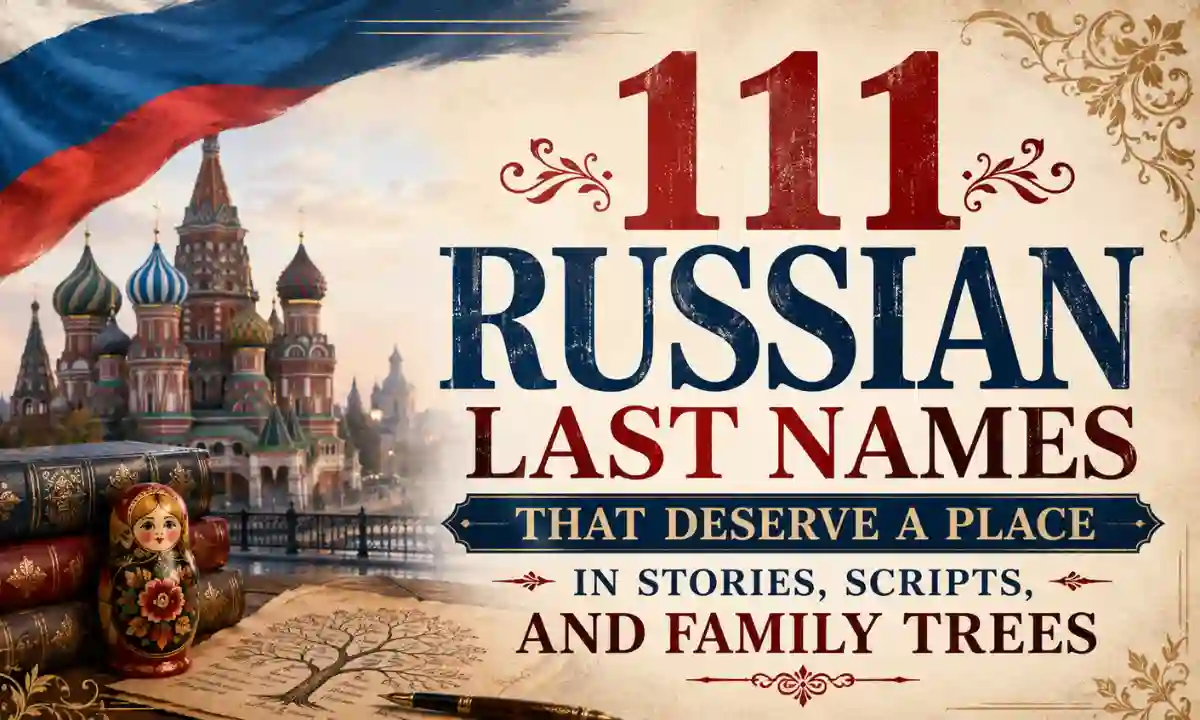
Understanding Celtic surnames is therefore simultaneously an exercise in linguistics, genealogy, history, and resistance. Every Celtic surname tells a story not just about the family that bears it but about the broader history of how Celtic cultures survived — sometimes intact, sometimes transformed, always present.
This list covers Celtic surnames across the full range of Celtic traditions — Irish, Scottish, Welsh, Cornish, Manx, and Breton — with genuine meanings, cultural contexts, and the stories that make these surnames more than simply pleasant sounds.
📌 Celtic surnames often carry meanings that exist in multiple layers — the original Gaelic or Welsh linguistic meaning, the historical figure who founded the surname, and the cultural context of the Celtic tradition from which the name emerged. The meanings given here attempt to capture all available layers.
Understanding Celtic Surname Traditions
The Irish Ó and Mac System
Irish surnames developed through the patronymic system — names derived from a famous ancestor. The Ó prefix means grandson of or descendant of — Ó Briain means descendant of Brian. The Mac prefix means son of — Mac Cárthaigh means son of Carthach. These prefixes were attached to the name of a significant ancestor — typically a great king, warrior, or saint — to create surnames that connected every bearer to that founding figure.
The Norman and English conquests of Ireland from the twelfth century onward put enormous pressure on Irish naming. The policy of Anglicization during the seventeenth and eighteenth centuries required or strongly encouraged the replacement of Ó and Mac with O’ and Mc or removal of the prefix entirely. The Great Famine of the 1840s caused further disruption — many families who survived emigration dropped or anglicized their names in their new countries. The Gaelic Revival of the late nineteenth and early twentieth centuries led to restoration of Ó and Mac where they had been dropped — Ó Briain reclaiming the prefix from O’Brien.
The Scottish Clan System
Scottish Gaelic surnames developed through the clan system — the kinship network organized around a chief and his people. The Mac prefix functions the same way as in Irish — Mac Domhnaill means son of Domhnall, creating the MacDonald clan. Scottish clan surnames carry specific territorial, genealogical, and political associations that Irish surnames share but often to a lesser degree — the association between the MacGregors and their outlawed status, the MacDonalds and the Lordship of the Isles, the Campbells and their complex relationship with the Scottish crown.
Scottish Gaelic surnames also show significant Norse influence — names like MacSorley from Somhairle, MacAulay from Olaf, and MacIvor from Ivar reflect the Norse-Gaelic fusion of the Western Isles tradition.
The Welsh Patronymic System
Welsh surnames developed differently from Irish and Scottish surnames. The traditional Welsh system used the patronymic ap meaning son of — ap Rhys meaning son of Rhys, ab Owen meaning son of Owen. The English administrative requirement for fixed hereditary surnames led to the transformation of these patronymics into permanent family names — typically by fusing the ap or ab with the father’s name. Ap Rhys became Price. Ap Howell became Powell. Ab Owen became Bowen. This fusion mechanism created the characteristic Welsh surnames that begin with P, B, or F — each one encoding the ap or ab that was absorbed.
Breton and Cornish Traditions
Breton and Cornish surnames — the surviving Brittonic Celtic languages of continental Europe and southwestern England respectively — show different patterns from the Goidelic Celtic languages of Ireland and Scotland. Breton surnames frequently begin with Ker- meaning village or homestead — Kermarrec, Kergoat, Kerleau — reflecting the Breton tradition of naming families after their ancestral farmstead. Cornish surnames show similar patterns — Trevithick from tre meaning farmstead, Penrose from pen meaning headland and ros meaning heath.
Irish Ó Surnames
Ó Briain
• English form: O’Brien • Meaning: Descendant of Brian • Origin of ancestor: Brian Boru, High King of Ireland who broke Viking power at Clontarf in 1014 • Cultural context: Ó Briain is one of the most significant surnames in Irish history — the descendants of the greatest High King of Ireland who ruled Munster for centuries. The O’Brien family produced kings, scholars, and politicians across a thousand years. Every Ó Briain carries the heritage of the man who unified Ireland and died in victory.
Ó Néill
• English form: O’Neill • Meaning: Descendant of Niall • Origin of ancestor: Niall of the Nine Hostages, legendary High King • Cultural context: Ó Néill was the most powerful family in Ulster for centuries — the kings of Tír Eoghain whose power dominated northern Ireland from the medieval period through the Flight of the Earls in 1607. Hugh O’Neill — Aodh Mór Ó Néill — who nearly defeated Elizabethan conquest at the Battle of the Yellow Ford was the last great Gaelic chieftain of Ulster.
Ó Conchobhair
• English form: O’Connor • Meaning: Descendant of Conchobar, lover of hounds • Origin of ancestor: Various kings named Conchobar • Cultural context: Multiple branches of the Ó Conchobhair family ruled Connacht and claimed the High Kingship — Ruaidrí Ó Conchobhair was the last High King of Ireland. The family’s division into multiple branches — Ó Conchobhair Donn, Ó Conchobhair Ruadh — produced the complex internal politics that weakened Connacht before the Norman invasion.
Ó Murchadha
• English form: Murphy, O’Murrough • Meaning: Descendant of Murchadh, sea warrior • Origin of ancestor: Sea warriors of the Leinster and Munster traditions • Cultural context: Murphy — from Ó Murchadha — is the most common Irish surname, borne by approximately one in fifty Irish people. The sea warrior meaning carries the heritage of the maritime warrior tradition that was central to coastal Irish culture. Every Murphy carries this oceanic warrior heritage in one of the world’s most widely distributed Irish surnames.
Ó Súilleabháin
• English form: O’Sullivan • Meaning: Descendant of Súileabhán, dark-eyed one or one-eyed • Origin of ancestor: A Munster chieftain • Cultural context: O’Sullivan is the third most common Irish surname — primarily associated with County Cork and Kerry where the O’Sullivan Mór and O’Sullivan Beare were significant lordships. The dark-eyed or one-eyed meaning creates a physical description ancestor whose distinctive feature became a dynasty’s identifier.
Ó Ceallaigh
• English form: O’Kelly • Meaning: Descendant of Ceallach, bright-headed or church • Origin of ancestor: Ceallach, a Connacht king • Cultural context: O’Kelly is one of Connacht’s most significant surnames — the O’Kelly family were kings of Uí Maine in what is now County Galway. Their bright-headed church ancestor gave his name to a family that dominated the ecclesiastical and political landscape of the west of Ireland.
Ó Dochartaigh
• English form: O’Doherty • Meaning: Descendant of Dochartach, hurtful or obstructive • Origin of ancestor: A Donegal chieftain • Cultural context: The O’Doherty family were lords of Inishowen in County Donegal — the peninsula that forms the northernmost part of Ireland. Cahir O’Doherty’s rebellion of 1608 — the last great Gaelic uprising in Ulster — was suppressed with the burning of Derry. His hurtful-ancestor name carried the heritage of the last resistance before Ulster was planted with Scottish settlers.
Ó Maolalaidh
• English form: Mullally, Molloy • Meaning: Descendant of the chief of Fal, devotee of the sacred stone • Origin of ancestor: A noble ancestor • Cultural context: The Ó Maolalaidh family carries a connection to Fál — the sacred stone of Irish kingship at Tara. The devotee of the sacred stone name creates a surname of extraordinary mythological depth connecting the family directly to the inauguration stone of the High Kings.
Ó Faoláin
• English form: Phelan, Whelan • Meaning: Descendant of Faolán, little wolf • Origin of ancestor: A Leinster chieftain • Cultural context: The Ó Faoláin family were kings of the Déisi in what is now County Waterford — an ancient tribal territory whose origins stretched back to mythological time. The little wolf ancestor name carries the heritage of the wolf’s power in the diminutive form that implies youth and potential.
Ó Maonaigh
• English form: Mooney • Meaning: Descendant of Maonach, dumb or wealthy • Origin of ancestor: A Connacht ancestor • Cultural context: The dumb or wealthy ancestor of the Mooney family creates an interesting ambiguity — the wealthy interpretation suggesting an ancestor of notable prosperity, the dumb interpretation suggesting one who was notably silent or reserved.
Ó Cleirigh
• English form: O’Clery • Meaning: Descendant of the cleric, descendant of the scholar • Origin of ancestor: A clerical or scholarly ancestor • Cultural context: The Ó Cleirigh family were the hereditary historians and poets of the O’Donnells of Donegal. Micheál Ó Cleirigh was the principal compiler of the Annals of the Four Masters — the monumental seventeenth century chronicle of Irish history that preserved centuries of Irish historical records. Every Ó Cleirigh carries the heritage of the family who maintained Irish historical memory through its most threatened period.
Ó Domhnaill
• English form: O’Donnell • Meaning: Descendant of Domhnall, world ruler • Origin of ancestor: Domhnall, a Donegal ancestor • Cultural context: The O’Donnell family were the great rivals and sometimes allies of the O’Neills in Ulster — the lords of Tír Conaill who controlled County Donegal. Red Hugh O’Donnell — Aodh Ruadh Ó Domhnaill — was one of the leaders of the Nine Years War whose defeat at Kinsale led to the Flight of the Earls. Every Ó Domhnaill carries the heritage of the last great Gaelic chieftains of Ulster.
Ó Loingsigh
• English form: Lynch • Meaning: Descendant of Loingseach, mariner, sea captain • Origin of ancestor: A mariner ancestor • Cultural context: The Lynch family of Galway were one of the Tribes of Galway — the fourteen merchant families that dominated Galway city from the medieval period. Lynch’s Law — the term for summary justice — allegedly derives from a Galway mayor named Lynch who hanged his own son for murder rather than let him escape justice. The mariner ancestor name carries the heritage of a seafaring trading family.
Ó Lochlainn
• English form: O’Loughlin, Lohan • Meaning: Descendant of Lochlann, Norse lands, land of the lochs • Origin of ancestor: An ancestor with Norse connections • Cultural context: The Ó Lochlainn family were kings of Corcomroe in County Clare — the Norse lands ancestor name recording either a connection to the Norsemen who settled Ireland or simply the Norse-influenced landscape of the western coast.
Ó Meachair
• English form: Meagher, Maher • Meaning: Descendant of Meachar, kindly, hospitable • Origin of ancestor: A Tipperary chieftain • Cultural context: The Maher family were lords of Ikerrin in County Tipperary whose kindly hospitable ancestor created a surname of positive character description. The hospitality meaning carries the heritage of the Irish value of generous hosting — the virtue that was simultaneously a social obligation and a mark of nobility.
Irish Mac Surnames
Mac Cárthaigh
• English form: McCarthy • Meaning: Son of Carthach, loving one • Origin of ancestor: Carthach, king of Munster • Cultural context: The McCarthy family were kings of Desmond — the south of Munster — for centuries after the Norman invasion. The loving one ancestor created a dynasty that produced the Kings of Munster and the great lords of Cork and Kerry. Cormac MacCarthy’s Romanesque chapel on the Rock of Cashel is one of the finest pieces of twelfth century architecture in Ireland.
Mac Cormaic
• English form: McCormack, Cormack • Meaning: Son of Cormac, son of the charioteer • Origin of ancestor: Cormac, the great legendary king • Cultural context: The McCormack family carries the heritage of Cormac mac Airt — the greatest of the mythological High Kings — through the patronymic son of Cormac formula.
Mac Giolla Chríost
• English form: Gilchrist • Meaning: Son of the servant of Christ • Origin of ancestor: A devotee of Christ • Cultural context: The Giolla naming pattern — servant or devotee of — produced multiple Irish and Scottish surnames. Mac Giolla Chríost — son of the servant of Christ — carries the heritage of a profoundly Christian ancestor whose devotion was their defining characteristic.
Mac Gabhann
• English form: MacGowan, Smith • Meaning: Son of the smith • Origin of ancestor: A blacksmith ancestor • Cultural context: Mac Gabhann means son of the smith — the gabhann or smith being one of the most significant craftsmen in Gaelic society. The smith’s semi-magical status — transforming raw iron into weapons and tools — gave the Mac Gabhann family a heritage of craft and transformation.
Mac Aodha
• English form: McHugh, Hughes • Meaning: Son of Aodh, son of fire • Origin of ancestor: An ancestor named for fire • Cultural context: Mac Aodha means son of fire — the fire name Aodh creating a surname of elemental power. Multiple Irish families bore this name from different Aodh ancestors.
Mac an Bháird
• English form: Ward • Meaning: Son of the bard, son of the poet • Origin of ancestor: A hereditary bard or poet • Cultural context: Mac an Bháird — son of the bard — was the surname of the hereditary poetic family of the O’Donnells of Donegal. Fearghal Óg Mac an Bháird was one of the most significant Irish poets of the late sixteenth century whose elegies for the fallen Gaelic order are among the most moving poems in the Irish language.
Mac Piarais
• English form: Pierce, Pearce • Meaning: Son of Piaras, son of Pierce • Origin of ancestor: A Hiberno-Norman ancestor named Piers • Cultural context: Mac Piarais demonstrates how Hiberno-Norman given names — Piers being a Norman form of Peter — were absorbed into the Irish Mac naming system, creating Irish surnames from Norman given names.
Mac Giolla Mhuire
• English form: Gilmore, Gilmour • Meaning: Son of the devotee of Mary • Origin of ancestor: A Marian devotee • Cultural context: Mac Giolla Mhuire — son of the devotee of Mary — carries the heritage of the Marian devotion that was central to Irish Catholic tradition. The Virgin Mary’s presence in Irish religious life created multiple surnames of this Giolla Mhuire form.
Mac Lochlainn
• English form: McLoughlin, MacLaughlin • Meaning: Son of the man of the Norse lands • Origin of ancestor: An ancestor with Norse connections • Cultural context: Mac Lochlainn was a significant Donegal family — the kings of Tír Eoghain before the rise of the O’Neills. Their Norse lands ancestor created a surname that recorded the complex Irish-Norse cultural fusion of the early medieval period.
Mac Eochagáin
• English form: Geoghegan • Meaning: Son of Eochagán, son of little horseman • Origin of ancestor: A Meath horseman ancestor • Cultural context: Mac Eochagáin were the lords of Kinaleagh in County Westmeath — their little horseman ancestor carrying the heritage of equestrian warrior culture that was central to Gaelic nobility.
Scottish Clan Surnames
MacDonald
• Gaelic form: Mac Domhnaill • Meaning: Son of Domhnall, son of the world ruler • Clan heritage: Lords of the Isles, Scotland’s most powerful Highland clan • Cultural context: The MacDonalds — Clann Domhnaill — were Scotland’s most significant Highland clan for centuries, controlling the Lordship of the Isles that stretched from the Hebrides to Ulster. Their world ruler ancestor — from Somerled who drove the Norse from western Scotland — gave them a surname of complete sovereign aspiration. Clan Donald’s motto Buaidh No Bàs — Victory or Death — encapsulates the warrior tradition that their world ruler surname carried.
Campbell
• Gaelic form: Caimbeul • Meaning: Crooked mouth, twisted mouth • Clan heritage: Dukes of Argyll, one of Scotland’s most powerful lowland-Highland clans • Cultural context: The Campbells rose to power through strategic alliance with the Scottish crown and became the most politically significant Highland clan. Their crooked mouth name — a physical description of an ancestor — belies the extraordinary political acuity that characterized the family’s rise. The Glencoe Massacre of 1692 — when Campbell soldiers killed MacDonalds who had offered them hospitality — remains the most notorious act in Highland clan history.
MacLeod
• Gaelic form: Mac Leòid • Meaning: Son of Ljótr, son of the ugly one • Clan heritage: Dunvegan Castle, Skye • Cultural context: The MacLeods carry the Norse name Ljótr — the ugly one — as their founding ancestor through Leòd son of Olaf the Black, a Norse king of Man. Their Norse-Gaelic heritage and their Dunvegan Castle — the oldest continuously inhabited castle in Scotland — make MacLeod one of the most historically significant Highland clan names.
MacGregor
• Gaelic form: Mac Greagair • Meaning: Son of Gregory, son of the watchful one • Clan heritage: Rob Roy MacGregor, proscribed clan • Cultural context: The MacGregors were proscribed — their name literally banned — by the Scottish Privy Council in 1603, forcing them to bear other surnames. The prohibition was only fully lifted in 1775. Rob Roy MacGregor the eighteenth century Highland outlaw and folk hero bore a name that was technically illegal during his lifetime. Every MacGregor carries the heritage of a name that survived its own official extinction.
Fraser
• Gaelic form: Friseal • Meaning: Possibly from a French place name; possibly from the strawberry plant fraise • Clan heritage: The Battle of Culloden • Cultural context: The Fraser clan rose to significance through strategic marriages and military service to the Scottish crown. Simon Fraser Lord Lovat who was executed after the Jacobite Rising of 1745 — the last man to be publicly beheaded in Britain — made this French-origin name one of the most significant in Highland history.
Stewart
• Origin: English occupational • Meaning: Steward, house guardian • Clan heritage: Royal House of Scotland and Britain • Cultural context: The Stewarts rose from hereditary stewards of the Scottish king to the royal house itself — Walter Stewart the sixth High Steward of Scotland married Marjorie Bruce and their son became Robert II the first Stewart king. The royal house that gave Britain the most politically tumultuous dynasty produced the surname that most dramatically demonstrates the transformation from occupation to dynasty.
MacKenzie
• Gaelic form: Mac Coinnich • Meaning: Son of Coinneach, son of the handsome/bright one • Clan heritage: Earls of Cromartie • Cultural context: The MacKenzie clan dominated the north Highlands for centuries — their handsome bright ancestor creating a surname that carried the heritage of the most powerful family in Ross-shire. Coinneach Odhar — the Brahan Seer — whose MacKenzie connection gives this surname its most mysterious association was the legendary Highland prophet.
MacPherson
• Gaelic form: Mac a’ Phearsain • Meaning: Son of the parson, son of the priest • Clan heritage: Cluny MacPherson • Cultural context: MacPherson — son of the parson — carries the heritage of the clerical ancestor whose role in the church gave his descendants their surname. James Macpherson the controversial author of the Ossian poems — the eighteenth century literary sensation that claimed to translate ancient Scottish Gaelic poetry — bore this parson’s son name while conducting one of literary history’s most debated acts of creative scholarship.
Gordon
• Origin: Scottish place name • Meaning: Great hill, spacious fort • Clan heritage: Earls and Marquesses of Huntly • Cultural context: The Gordon clan took their name from the Gordon lands in Berwickshire — great hill or spacious fort. Their rise to power in northeast Scotland through the earldom of Huntly made them the dominant Catholic family in Scotland during the Reformation. General Charles Gordon — Gordon of Khartoum — whose death in Khartoum in 1885 made him a Victorian imperial hero bore this Scottish great-hill name.
Cameron
• Gaelic form: Camshron • Meaning: Crooked nose, hooked nose • Clan heritage: Chiefs of Clan Cameron, Lochaber • Cultural context: The Cameron clan — Clan Cameron — were one of the most loyal Highland clans to the Jacobite cause. Their crooked nose ancestor created a surname that like the Campbells carried a physical description of the founding figure. Donald Cameron the Gentle Lochiel who supported Bonnie Prince Charlie despite his doubts about the rising gave this crooked-nose surname its most romantic Jacobite association.
Ross
• Gaelic form: Ros • Meaning: Headland, peninsula • Clan heritage: Earls of Ross • Cultural context: Ross takes its name from the peninsula of Ross in northern Scotland — the headland name designating families from this geographical feature. The Earldom of Ross was one of the most contested titles in medieval Scotland — disputed between Norse, Gaelic, and Scottish royal claimants.
Murray
• Gaelic form: Moireach • Meaning: From Moray, settlement by the sea • Clan heritage: Dukes of Atholl • Cultural context: Murray takes its name from Moray — the settlement by the sea — in northeastern Scotland. Lord Murray who became the first Duke of Atholl created one of Scotland’s most significant noble lines. The Murray clan’s association with Perthshire gave them control of the strategic heart of Scotland.
Scottish Mac Surnames
MacInnes
• Gaelic form: Mac Aonghais • Meaning: Son of Aonghas, son of the unique one • Cultural context: Mac Aonghais — son of the unique or singular one — carries the heritage of the distinctive ancestor whose quality of uniqueness defined the family. Aonghas was one of the significant names in both Irish and Scottish Gaelic tradition.
MacNab
• Gaelic form: Mac an Aba • Meaning: Son of the abbot • Cultural context: MacNab — son of the abbot — carries the heritage of the monastic leader whose ecclesiastical role defined his descendants. The MacNab clan were hereditary lay abbots of Glendochart — a role that combined religious authority with secular power.
MacMillan
• Gaelic form: Mac Maoláin • Meaning: Son of the devotee of the tonsured one • Cultural context: MacMillan may derive from Mac Gille Mhaoláin meaning son of the servant of the tonsured one — the tonsured monk whose shaved head distinguished him. The publisher Harold Macmillan who became British Prime Minister bore this monastic-heritage name.
MacArthur
• Gaelic form: Mac Artair • Meaning: Son of Arthur, son of the bear • Cultural context: MacArthur — son of Arthur — carries the heritage of the bear name through the Celtic Arthur tradition. The MacArthurs were one of the oldest Argyll clans and claimed descent from the same ancient stock as the Campbells. General Douglas MacArthur bore this ancient bear-son name.
MacCrimmon
• Gaelic form: Mac Cruimein • Meaning: Son of Cruimein, unknown meaning • Cultural context: The MacCrimmons were the hereditary pipers to the MacLeods of Skye — the most celebrated piping family in Highland history. Their college of piping — Boreraig in Skye — produced generations of the most accomplished pipers. The MacCrimmon piobaireachd — the great music — is the most complex and most revered form of Highland bagpipe music.
MacAulay
• Gaelic form: Mac Amhlaigh • Meaning: Son of Olaf, son of the ancestor’s relic • Cultural context: MacAulay carries the Norse name Olaf — the ancestor’s relic — through the Gaelic Mac formula. Thomas Babington Macaulay the Victorian historian whose History of England was one of the most widely read historical works of the nineteenth century bore this Norse-Gaelic name.
MacTaggart
• Gaelic form: Mac an t-Sagairt • Meaning: Son of the priest • Cultural context: MacTaggart — son of the priest — carries the same ecclesiastical heritage as the Irish Mac an Bháird tradition. The priest’s son surname records the practice of hereditary religious offices in the early Celtic church.
MacIver
• Gaelic form: Mac Ìomhair • Meaning: Son of Ivar, son of the bow warrior • Cultural context: MacIver carries the Norse name Ivar — the bow warrior — through the Gaelic Mac formula. The bow warrior ancestor creates a Norse-Gaelic warrior heritage.
MacQuarrie
• Gaelic form: Mac Guaire • Meaning: Son of Guaire, son of the noble one • Cultural context: MacQuarrie carries the noble one name through the Mac formula — the noble ancestor giving the family its defining quality. Lachlan Macquarie who served as governor of New South Wales and is called the Father of Australia bore this noble-ancestor name.
MacBeth
• Gaelic form: Mac Beatha • Meaning: Son of life, man of life • Cultural context: MacBeth — son of life — was the name of the historical King of Scotland who ruled from 1040 to 1057 and who Shakespeare transformed into the murderous Thane. The historical MacBeth was a competent and relatively peaceful king whose name was a devotional declaration — the son of life carried the Christian understanding of spiritual vitality.
Welsh Patronymic Surnames
Price
• Welsh origin: Ap Rhys • Meaning: Son of Rhys, son of the ardent one • Cultural context: Price is the anglicization of ap Rhys — son of Rhys — where the ap has been fused with the father’s name to create the modern surname. Rhys meaning ardent or passionate was one of the most common Welsh given names — carried by kings of Deheubarth and by the great Lord Rhys who negotiated with Henry II. Every Price carries the suppressed ap that marks the Welsh patronymic origin.
Powell
• Welsh origin: Ap Howell/Hywel • Meaning: Son of Hywel, son of the eminent one • Cultural context: Powell comes from ap Hywel — son of Hywel — where the ap fused with Howell. Hywel Dda — Hywel the Good — was the tenth century Welsh king who codified Welsh law. Every Powell carries the eminent ancestor who gave Welsh law its most significant development.
Bowen
• Welsh origin: Ab Owen • Meaning: Son of Owen, son of the young warrior • Cultural context: Bowen comes from ab Owen — son of Owen — where the ab has been absorbed. Owen or Owain was one of the most significant Welsh names — Owain Glyndŵr who led the last major Welsh rebellion against English rule bore this name. Every Bowen carries the young warrior ancestor through the fused ab.
Pugh
• Welsh origin: Ap Hugh/Huw • Meaning: Son of Hugh, son of the heart-mind • Cultural context: Pugh comes from ap Huw — son of Hugh — where the ap has been fused. The heart-mind meaning of Hugh (from the Germanic hug) creates a surname of psychological depth.
Prichard
• Welsh origin: Ap Richard • Meaning: Son of Richard, son of the powerful ruler • Cultural context: Prichard comes from ap Richard — son of Richard — where the Norman given name Richard was absorbed into the Welsh patronymic system and then fused with the ap prefix.
Probert
• Welsh origin: Ap Robert • Meaning: Son of Robert, son of the bright fame • Cultural context: Probert comes from ap Robert — son of Robert — following the same ap-fusion mechanism that produced Price, Powell, and Prichard.
Fluellen
• Welsh origin: Ap Llewelyn • Meaning: Son of Llewelyn, son of the lion leader • Cultural context: Fluellen — Shakespeare’s Welsh captain in Henry V — represents the anglicization of ap Llewelyn where the f- replaces the older ap form. Llewelyn meaning lion leader or possibly lead and flow was the name of the great Welsh princes. Shakespeare’s Welsh character bore this characteristic Welsh-patronymic transformed name.
Anwyl
• Welsh origin: Direct Welsh word • Meaning: Dear, beloved • Cultural context: Anwyl as a surname comes directly from the Welsh adjective anwyl meaning dear or beloved — a term of endearment that became a family name. It is one of the Welsh descriptive surnames that carries an entirely positive emotional meaning.
Gwyn
• Welsh origin: Welsh adjective • Meaning: White, fair, blessed • Cultural context: Gwyn as a surname comes from the Welsh gwyn meaning white or blessed. As a surname it may designate a fair-haired ancestor or carry the blessed quality that gwyn has in Welsh metaphysical tradition.
Llywelyn
• Welsh origin: Direct use of given name • Meaning: Lion leader, leading lion, possibly flood and lion • Cultural context: Llywelyn used directly as a surname carries the heritage of the Welsh princes — Llywelyn ap Gruffudd the Last who died in 1282 and whose death ended the independent Welsh principality.
Tudor
• Welsh origin: Welsh form of Theodore • Meaning: Gift of God • Cultural context: Tudor — the Welsh form of Theodore meaning gift of God — gave Britain its most famous royal dynasty. Owain Tudur who married Henry V’s widow Catherine of Valois began the family’s rise that culminated in Henry VII taking the English throne in 1485. The Tudor dynasty that produced Henry VIII, Mary I, and Elizabeth I carries this Welsh gift of God name through two centuries of English history.
Vaughan
• Welsh origin: Fychan • Meaning: Small, junior, the younger • Cultural context: Vaughan comes from the Welsh fychan meaning small or junior — the designator for a younger son. The Vaughan family produced Henry Vaughan the seventeenth century metaphysical poet whose luminous verse was rediscovered in the nineteenth century and influenced Gerard Manley Hopkins.
Wynn
• Welsh origin: Welsh gwyn/wyn • Meaning: White, fair, blessed • Cultural context: Wynn is a variant spelling of Gwyn — the white or blessed name. The Wynn family of Wynnstay in northeast Wales were significant Welsh gentry. Steve Wynn the Las Vegas casino developer bore this Welsh fair name in a very different context.
Meredith
• Welsh origin: Meredudd • Meaning: Great lord, magnificent lord • Cultural context: Meredith comes from the Welsh Meredudd — meredd meaning magnificence or lordship — creating the great lord or magnificent lord surname. Burgess Meredith the actor and various cultural figures bore this magnificent lord Welsh name.
Welsh Descriptive and Nature Surnames
Lloyd
• Welsh origin: Welsh llwyd • Meaning: Grey, grey-haired • Cultural context: Lloyd comes from the Welsh llwyd meaning grey — the physical description name for a grey-haired or grey-complexioned ancestor. Lloyd George the Welsh prime minister who led Britain through the First World War bore this grey Welsh surname. Lloyd’s of London the insurance market takes its name from Edward Lloyd’s coffee house rather than the Welsh, but the surname connection to the Welsh grey tradition is genuine.
Gough
• Welsh origin: Welsh coch • Meaning: Red, red-haired • Cultural context: Gough comes from the Welsh coch meaning red — the red-haired ancestor. The Welsh naming tradition of color description created multiple surnames: Lloyd from grey, Gough from red, Gwyn from white. Matthew Gough the fifteenth century Welsh soldier who served in the Hundred Years War and was killed during Jack Cade’s rebellion bore this red ancestor name.
Morgan
• Welsh origin: Welsh/Celtic compound • Meaning: Sea circle, sea-born, bright sea • Cultural context: Morgan comes from the Welsh mor meaning sea and can meaning circle or born — the sea circle or sea-born. Morgan le Fay — the fairy Morgan of Arthurian legend — bore this sea name. J.P. Morgan the American financier who dominated Gilded Age capitalism bore this Welsh sea surname in the context most remote from its Celtic origins.
Griffith
• Welsh origin: Welsh Gruffudd • Meaning: Strong lord, lord’s grip • Cultural context: Griffith is the anglicization of the Welsh Gruffudd — the strong lord name borne by multiple Welsh princes. D.W. Griffith the pioneer of cinema who directed Birth of a Nation and Intolerance bore this strong lord Welsh surname.
Rhys
• Welsh origin: Direct use of Welsh name • Meaning: Ardent, enthusiastic, warrior • Cultural context: Rhys used directly as a surname carries the heritage of the passionate warrior name. The Lord Rhys — Rhys ap Gruffudd — who dominated south Wales in the twelfth century gave this ardor name its most significant historical bearer.
Owen
• Welsh origin: Direct use of Welsh name • Meaning: Young warrior, well-born • Cultural context: Owen used as a surname carries the heritage of the young warrior name. Wilfred Owen the First World War poet whose Dulce et Decorum Est is the most celebrated anti-war poem in the English language bore this Welsh young warrior name.
Llewellyn
• Welsh origin: Welsh Llywelyn • Meaning: Lion leader • Cultural context: Llewellyn as a surname carries the heritage of the Welsh princes directly — the lion leader name preserved as a family identifier. Richard Llewellyn who wrote How Green Was My Valley bore this lion leader name.
Cornish Surnames
Trevithick
• Cornish origin: Tre + fythyk • Meaning: Farmstead of Fethyk, possibly small homestead • Cultural context: Trevithick follows the tre prefix — farmstead — that is the most characteristic feature of Cornish surnames. Richard Trevithick the inventor of the steam locomotive who built the first full-scale working railway steam locomotive in 1804 bore this farmstead surname while revolutionizing transportation. The farmstead innovator who created the machine that remade the world.
Penrose
• Cornish origin: Pen + ros • Meaning: Headland of the heath, heath headland • Cultural context: Penrose combines the Cornish pen meaning headland or top with ros meaning heath or promontory — the heath headland. Roger Penrose the mathematician and physicist who won the Nobel Prize for his work on black holes bore this Cornish heath headland name.
Penhallow
• Cornish origin: Pen + hal + ow • Meaning: Headland of the moor • Cultural context: Penhallow combines pen headland with hal moor — the headland above the moor. It is one of the characteristic Cornish geographical compound surnames.
Tremayne
• Cornish origin: Tre + mayn • Meaning: Farmstead by the stone • Cultural context: Tremayne combines tre farmstead with mayn meaning stone — the farmstead by the standing stone or stone feature. The standing stone connection gives Tremayne a heritage of ancient monumental landscape.
Pascoe
• Cornish origin: Cornish Pask • Meaning: Easter, Passover, born at Easter • Cultural context: Pascoe comes from the Cornish Pask meaning Easter — the family born at or associated with the Easter festival. The Easter surname carries the heritage of the most significant Christian festival in the Celtic ecclesiastical calendar.
Trewin
• Cornish origin: Tre +wyn • Meaning: White farmstead, fair settlement • Cultural context: Trewin combines tre farmstead with the Celtic gwyn/wyn meaning white or fair — the white farmstead or fair settlement.
Carbis
• Cornish origin: Unknown, possibly kar + bos • Meaning: Possibly fort and dwelling • Cultural context: Carbis — home of Carbis Bay near St. Ives — represents the category of Cornish surnames derived from place names whose compound elements include the ancient Cornish vocabulary.
Polkinghorne
• Cornish origin: Pol + kyn + horn • Meaning: Pool of the army enclosure • Cultural context: Polkinghorne is one of the most elaborately compound Cornish surnames — combining pol meaning pool with kyn meaning army or warriors and horn meaning enclosure or horn. John Polkinghorne the physicist and theologian who wrote on the relationship between science and religion bore this army-pool surname.
Nancarrow
• Cornish origin: Nans + carow • Meaning: Valley of the deer • Cultural context: Nancarrow combines the Cornish nans meaning valley with carow meaning deer — the deer valley. Conlon Nancarrow the American-Mexican composer who wrote music for player piano bore this Cornish deer valley surname.
Treloar
• Cornish origin: Tre + loer • Meaning: Farmstead of the moonlight • Cultural context: Treloar combines tre farmstead with loer meaning moon — the farmstead of the moonlight or the moonlit settlement. William Treloar who was Lord Mayor of London and founded the Treloar Trust for disabled children bore this moonlit farmstead name.
Manx Surnames
Corlett
• Manx Gaelic origin: Mac Thorljótr • Meaning: Son of Thor-Ljótr, son of the thunder ugly one • Cultural context: Corlett is the Manx anglicization of a Norse-Gaelic compound — the Thor ugly one or thunder-fierce person giving the Man surname its Norse heritage. The Isle of Man’s naming tradition shows the Norse-Gaelic fusion more clearly than any other Celtic tradition.
Quayle
• Manx Gaelic origin: Mac Phail • Meaning: Son of Paul, son of the small one • Cultural context: Quayle is the Manx form of Mac Phail — son of Paul. Dan Quayle the US Vice President bore this Manx patronymic name in its most prominent recent appearance.
Quirk
• Manx Gaelic origin: Mac Cuirc • Meaning: Son of Corc, son of the red one • Cultural context: Quirk is the Manx anglicization of Mac Cuirc — the red one ancestor giving this Manx surname its color description heritage.
Cregeen
• Manx Gaelic origin: Mac Riagain • Meaning: Son of Riagán, son of the little king • Cultural context: Cregeen is the Manx form of the Irish Ó Riagáin — the little king ancestor creating a Manx royal aspiration surname.
Clucas
• Manx Gaelic origin: Mac Lúcais • Meaning: Son of Lucas, son of the light • Cultural context: Clucas is the Manx form of Mac Lúcais — son of Luke — the light meaning from the Latin Lucius giving this Manx surname its luminous heritage.
Kewley
• Manx Gaelic origin: Mac Amhlaoibh • Meaning: Son of Olaf, son of the ancestor’s relic • Cultural context: Kewley is the Manx transformation of the Norse-Gaelic Mac Amhlaoibh — the Norse Olaf ancestor’s relic name passed through Manx phonology into a completely distinctive form.
Kinrade
• Manx Gaelic origin: Mac Conraoi • Meaning: Son of Conroe, son of the hound of the plain • Cultural context: Kinrade carries the hound of the plain warrior name through the Manx phonological transformation of the Gaelic Mac Conraoi.
Breton Surnames
Kermarrec
• Breton origin: Ker + Marrec • Meaning: Village of Marrec, Marrec’s hamlet • Cultural context: Kermarrec follows the ker prefix — village or hamlet — that is the most characteristic feature of Breton surnames. The hamlet of Marrec gives this Breton surname its specific geographical origin. The ker element preserves the Brythonic Celtic karo meaning love or the Brittonic caer meaning fortress depending on interpretation.
Le Goff
• Breton origin: Le + goff • Meaning: The smith • Cultural context: Le Goff means the smith in Breton — the goff element being the Breton word for blacksmith. Jacques Le Goff the distinguished French medieval historian who transformed understanding of the medieval world bore this Breton smith surname.
Kergoat
• Breton origin: Ker + coat • Meaning: Village of the wood, hamlet by the forest • Cultural context: Kergoat combines ker village with coat meaning wood or forest — the village of the wood. The forest connection gives this Breton surname the heritage of the wooded Armorican landscape.
Tanguy
• Breton origin: Celtic compound • Meaning: Fire hound, hound of fire • Cultural context: Tanguy combines the Breton tan meaning fire with ki meaning dog or hound — the fire hound. Yves Tanguy the Surrealist painter whose dreamlike underwater landscapes were among the most significant artworks of the Surrealist movement bore this fire-hound surname.
Calvez
• Breton origin: Breton word • Meaning: Bald, bare hill • Cultural context: Calvez comes from the Breton word for bald or bare — typically referring to an exposed headland or bare hill rather than personal baldness. The geographical precision of Breton surnames gives Calvez its specific landscape heritage.
Prigent
• Breton origin: Breton form • Meaning: Prigent, from a personal name • Cultural context: Prigent is a Breton surname derived from a medieval personal name whose meaning is uncertain. It appears in Breton records from the medieval period and carries the complete heritage of the Breton naming tradition.
Hamon
• Breton origin: Germanic/Breton • Meaning: Home, possibly from Hamo • Cultural context: Hamon represents the Breton absorption of the Germanic name Hamo — following the same pattern of Norman and Frankish names being absorbed into Breton tradition that parallels the Irish absorption of Norman names.
Jézéquel
• Breton origin: Breton form of Ezekiel • Meaning: God strengthens, biblical origin • Cultural context: Jézéquel is the Breton phonological transformation of the Hebrew Ezekiel — the prophet whose name means God strengthens. The transformation through Breton phonology creates a completely distinctive form of a biblical name.
Cadiou
• Breton origin: Breton form of Cadoc • Meaning: Battle, warrior • Cultural context: Cadiou derives from the Brythonic Celtic cad meaning battle — the warrior name through the Breton tradition. Saint Cadoc the Welsh and Breton saint gave this battle name its ecclesiastical dimension.
Tréguier
• Breton origin: Place name • Meaning: From Tréguier, the meeting of three roads • Cultural context: Tréguier is a Breton place name — the city of Tréguier in the Côtes-d’Armor — that has become a surname. Ernest Renan the nineteenth century philosopher and historian who wrote The Life of Jesus was born in Tréguier — giving this three-roads place name its most significant intellectual association.
Surnames of the Celtic Diaspora
Kennedy
• Irish origin: Ó Cinnéide • Meaning: Descendant of Cinneide, ugly head or helmeted head • Cultural context: Kennedy — Ó Cinnéide — was a Dal Cais family related to Brian Boru who gave Ireland and America the most celebrated political family in Irish-American history. The ugly head or helmeted head ancestor created a surname that the Kennedy family of Wexford and Clare carried to Massachusetts where it became the most powerful Irish-American political dynasty.
Cassidy
• Irish origin: Ó Caiside • Meaning: Descendant of Caiside, possibly clever curly-haired one • Cultural context: Cassidy was a significant Fermanagh family whose name spread through the diaspora. Butch Cassidy the American outlaw whose real name was Robert LeRoy Parker adopted this Irish surname, giving the possibly curly clever name its most distinctly outlaw heritage.
Gallagher
• Irish origin: Ó Gallchobhair • Meaning: Descendant of the eager helper • Cultural context: Gallagher was a Donegal family whose name spread particularly through the Irish-American and British-Irish diasporas. Liam and Noel Gallagher of Oasis — the most significant British rock band of the 1990s — bore this eager helper name through the Irish Manchester community.
Duffy
• Irish origin: Ó Dubhthaigh • Meaning: Descendant of the dark one • Cultural context: Duffy — Ó Dubhthaigh — carries the dark one ancestor through one of the most common Irish-American surnames. The dark ancestor’s name spread through the massive Famine emigrations of the 1840s.
Brennan
• Irish origin: Ó Braonáin • Meaning: Descendant of Braonán, little raindrop, little sorrow • Cultural context: Brennan carries the little raindrop or little sorrow ancestor — the diminutive quality of the raindrop creating a name of delicate natural beauty. The Brennan family spread through Ireland and the diaspora.
Nolan
• Irish origin: Ó Nualláin • Meaning: Descendant of Nuallán, little noble one • Cultural context: Nolan — the little noble one — was an O’Brien family from County Carlow. Christopher Nolan the filmmaker whose Batman trilogy, Inception, and Oppenheimer have made him one of the most significant directors of his generation bears this little noble name.
Delaney
• Irish origin: Ó Dubhshláine • Meaning: Descendant of the dark challenger • Cultural context: Delaney — Ó Dubhshláine — carries the dark challenger ancestor. The dark challengers of the Slane area of County Meath gave their descendants one of the most evocative Irish surnames.
Rare and Ancient Celtic Surnames
Ó hUiginn
• English form: O’Higgins • Meaning: Descendant of Uiginn, possibly Viking or sharp-minded • Cultural context: Ó hUiginn were the hereditary poets of Connacht — their Uiginn ancestor possibly designating a Viking heritage or a sharp Viking-like quality. Bernardo O’Higgins the liberator of Chile was born from the line of an Ó hUiginn who became a Spanish colonial officer.
Mac Fhionnghaill
• English form: MacFingal, MacDonnell • Meaning: Son of the fair stranger, son of the fair Norseman • Cultural context: Mac Fhionnghaill — son of the fair stranger or fair Norseman — carries the heritage of the Norse-Gaelic fusion in one of its most explicitly ethnic forms.
Ó Cobhthaigh
• English form: Coffey, Cawley • Meaning: Descendant of Cobhthach, victorious • Cultural context: Ó Cobhthaigh carries the victorious ancestor through a surname that Anglicized as Coffey in most of Ireland. The victorious ancestor’s name preserves a quality of triumph.
Mac Giolla Íosa
• English form: MacAleese • Meaning: Son of the devotee of Jesus • Cultural context: Mac Giolla Íosa — son of the devotee of Jesus — carries the Giolla Jesus naming tradition. Mary McAleese who served as President of Ireland bore this devotee-of-Jesus name.
Ó Gearailt
• English form: Fitzgerald • Meaning: Descendant of Gerald, descendant of the spear ruler • Cultural context: Ó Gearailt — Fitzgerald — was the primary Hiberno-Norman family that became thoroughly Irish over centuries. Gerald of Wales was a Norman-Welsh historian whose Geraldine descendants in Ireland became one of the most significant families in Irish history. The spear ruler Norman ancestor gave rise to the Earls of Kildare and Desmond.
Mac Giolla Bhríde
• English form: McBride, Gilbride • Meaning: Son of the devotee of Brigid • Cultural context: Mac Giolla Bhríde — son of the devotee of Brigid — carries the Giolla tradition applied to Saint Brigid — the patron saint of Ireland who merged with the earlier Celtic goddess of fire and poetry. Every McBride carries the heritage of devotion to the most universally beloved of Irish saints.
Ó Maoldoraidh
• English form: Mulderry, Muldowney • Meaning: Descendant of the chief servant of the fortress • Cultural context: Ó Maoldoraidh carries the chief fortress servant ancestor — a compound of maol meaning chief or tonsured one with doradh possibly meaning fortress or gloomy.
Mac Síthigh
• English form: MacSheehy • Meaning: Son of Síthech, son of the peaceful one • Cultural context: Mac Síthigh carries the peaceful ancestor — the Síthech or peaceful one giving the family a name of genuine serenity. The MacSheehy were hereditary galloglass soldiers — the Scottish mercenary warriors who served Ulster and Munster chieftains.
Frequently Asked Questions
Q: What is the difference between Ó and Mac in Irish surnames? A: Ó means grandson of or descendant of — it comes from the Old Irish ua meaning grandson and indicates descent from a notable ancestor who lived several generations back. Mac means son of — it creates surnames from a father’s given name in the immediate generation. In practice by the time these became hereditary surnames they both simply designated descent from the named ancestor regardless of the specific generational relationship. The distinction between Ó and Mac families generally reflects different origins — Ó names tend to be older and often refer to royal or noble ancestors from the pre-Norman period, while Mac names can be both ancient and more recent. Some families have both an Ó and a Mac form from different branches.
Q: How did ap and ab in Welsh surnames become the P- and B- surnames we know today? A: The Welsh patronymic ap meaning son of — ap Rhys, ap Hywel — was used as a prefix before the father’s name. When English administrative pressure required fixed hereditary surnames, the Welsh took the most natural path and fused the ap with the following name. Ap Rhys became the Price family when the ap was absorbed — the p of ap combining with the Rh of Rhys to give Pr- and then the unstressed vowel of ap disappeared. Similarly ab Owen — son of Owen — became Bowen when the b of ab fused with the O of Owen. Ap Hugh became Pugh. Ap Evan became Bevan. The mechanism was entirely phonological — the unstressed syllable of ap or ab was absorbed into the initial sound of the following name. This is why Welsh surnames beginning with P, B, or F are typically disguised patronymics.
Q: Why do so many Celtic surnames begin with Ker- in Brittany? A: The Breton ker element — meaning village, hamlet, or home — is the Brythonic Celtic cognate of the Welsh caer meaning fortress and the Cornish ker meaning fort or enclosure. In Brittany the word specialized in meaning village or small farmstead and became the standard prefix for place names and subsequently surnames derived from those places. The Breton tradition of naming families after their ancestral farmstead — ker followed by a personal name or descriptive term — created hundreds of Ker- surnames. This tradition is paralleled in Cornish with the tre prefix meaning farmstead — both ker and tre encode the Brythonic Celtic relationship between family identity and specific place.
Q: Are there Celtic surnames that have survived completely unchanged from the earliest records? A: Yes, several Celtic surnames appear in records that are a thousand years old or more in forms very similar to their modern versions. Ó Néill appears in the Annals of Ulster under forms recognizable as the modern O’Neill from the tenth century onward. The Welsh Llywelyn appears as a surname form from the twelfth century. The Breton Ker- surnames appear in medieval Breton charters of the ninth and tenth centuries. What is more remarkable is that some Celtic surnames preserve linguistic forms that are archaic — forms that can only be fully analyzed through historical linguistics. The Cornish tre surnames preserve Cornish vocabulary that has otherwise been extinct as a spoken language for three centuries.
Q: Why were so many Celtic surnames anglicized and how can they be de-anglicized? A: Celtic surnames were anglicized through several mechanisms. Administrative pressure — English colonial governments required English-form names in legal documents. Social pressure — Celtic names were associated with lower social status in periods of colonial control. Phonological difficulty — English speakers genuinely could not pronounce Gaelic names and adapted them to what they could say. Emigration — the massive Celtic diasporas to America, Australia, and Britain encountered English monolingual environments where phonological adaptation was necessary for intelligibility. De-anglicization — the restoration of original forms — is relatively straightforward for those who know the original. O’Brien can become Ó Briain. MacDonald remains essentially unchanged. Price requires knowing that it comes from ap Rhys. The Irish government actively supports de-anglicization — registrars will accept Irish forms of names, the Gaelic League maintains resources for restoration, and there is no legal obstacle to using the original form.
Conclusion
Celtic surnames flow like Gaelic songs through the hills because they were born in those hills — the Irish hills where Ó Briain and Mac Cárthaigh built their kingdoms, the Scottish hills where MacDonald and MacGregor fought and hunted, the Welsh hills where ap Rhys became Price and ap Hywel became Powell, the Cornish headlands where Trevithick and Penrose and Penhallow preserve the ancient landscape vocabulary, the Manx crossroads where Norse and Gaelic fused into Corlett and Quayle, the Breton hamlets where every Ker- surname encodes the memory of a specific farmstead.
These surnames survived not because their bearers were passive — they survived because Celtic peoples were active in maintaining them, in passing them to children even when colonial pressure encouraged abandonment, in restoring them when political conditions allowed. The Ó restored to O’Brien, the Mac maintained in MacDonald, the ap preserved in the memory of Welsh patronymics even after centuries of P- disguise — these are not simply nice-sounding names. They are acts of cultural persistence.
Every Celtic surname is a small piece of language that refused to disappear. Together they form a record of what the Celtic peoples of Europe valued, how they understood identity and lineage and landscape, and how they kept faith with their ancestors across a thousand years of pressure to forget.
Which Celtic surname resonates most deeply with your own heritage? I would love to hear in the comments below!
Olivia Lane is a devoted Christian writer and faith blogger at PrayerPure.com, where she shares heartfelt prayers, Bible verses, and spiritual reflections to inspire believers around the world. Her gentle words help readers find peace, purpose, and strength in God’s presence every day. When she’s not writing, Olivia enjoys reading devotionals, spending time outdoors, and connecting with her church community.