

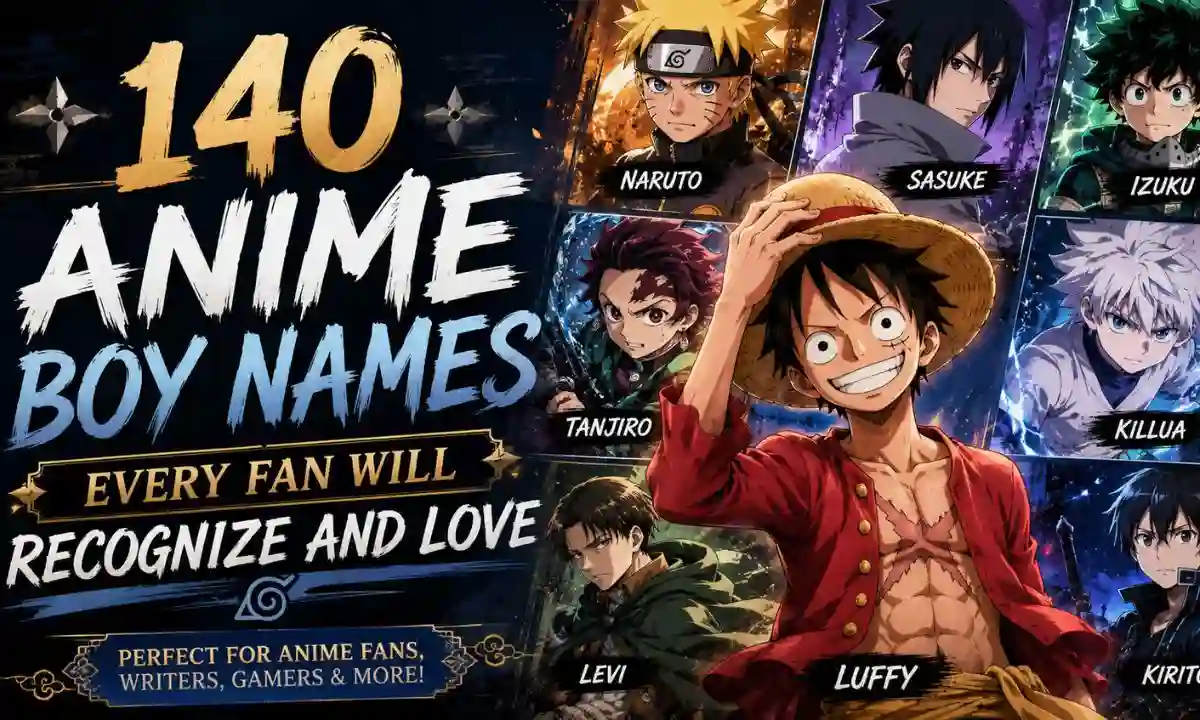
There is something genuinely extraordinary about anime names. They carry the specific weight of Japanese cultural history, the country’s complex relationship with its own ancient traditions and its rapid, determined engagement with modernity, the specific aesthetic of a storytelling tradition that has spent seventy years creating characters who embody virtues and struggles at a scale that Western storytelling rarely attempts. Anime names are not random. They are almost always meaningful, carrying inside them the specific thematic concerns of the stories they belong to, the specific qualities their characters are meant to embody, the specific cultural contexts that give Japanese naming its particular philosophical depth.
Japanese names are built from kanji, Chinese characters that each carry specific meanings and can be combined in multiple ways to create different names with different meanings even when they share the same reading. A character named Hikaru might have their name written with the kanji for light, for radiance, for shine, or for several other luminous concepts depending on the specific choice of character. This means that Japanese names carry a layered meaning that the romanized pronunciation only hints at, and that anime creators use with great intentionality, choosing the specific kanji combination that expresses the exact quality they want their character to embody.
Popularity rankings are based on the most recent Social Security Administration (SSA) data.
Quick Info: Names ranked >1000 on the SSA database are considered truly rare and unique. Names closer to 1 are among the most popular in the US today.
The Most Iconic Shonen Heroes
Naruto
- Origin: Japanese
- Meaning: Maelstrom, the spiral of the whirlpool
- Popularity: >1000
The name of the beloved protagonist of Masashi Kishimoto’s great ninja epic, Naruto carries the meaning of the whirlpool spiral that appears on the fish cake slices that the character loves, connecting his name to both his love of ramen and the spiral of the leaf village symbol. It is one of the most recognized anime names in the world.
Ichigo
- Origin: Japanese
- Meaning: One who protects, one five
- Popularity: >1000
The protagonist of Tite Kubo’s Bleach, Ichigo’s name can mean both strawberry in its most common reading and one who protects in the reading Kubo intended, carrying both a playful, slightly embarrassing quality and a profound heroic meaning simultaneously.
Goku
- Origin: Japanese/Sanskrit
- Meaning: Sky, void, from Sanskrit Sukhavati
- Popularity: >1000
The birth name of Kakarot transformed into the name by which all Dragon Ball fans know him, Goku carries the meaning of sky and void and a deep connection to the great Chinese novel Journey to the West whose Monkey King Sun Wukong he is based on.
Luffy
- Origin: Japanese/English
- Meaning: Rubber, carefree, uncertain etymology
- Popularity: >1000
The captain of the Straw Hat Pirates in Eiichiro Oda’s One Piece carries a name that sounds both carefree and determined, capturing the specific quality of Luffy’s character, someone who stretches in every sense.
Deku
- Origin: Japanese
- Meaning: Useless person, wooden puppet
- Popularity: >1000
Izuku Midoriya’s hero name in My Hero Academia begins as a cruel nickname from Bakugo that Midoriya reclaims and transforms into a symbol of heroism, carrying the specific anime theme of transforming shame into strength.
Tanjiro
- Origin: Japanese
- Meaning: Prosperous and tolerant son, second son
- Popularity: >1000
The protagonist of Demon Slayer whose name combines the characters for prosperous and tolerant in a way that perfectly describes his warm, persistent character, Tanjiro carries a deep connection to the Japanese tradition of names that describe character.
Edward
- Origin: Germanic/Japanese
- Meaning: Wealthy guardian
- Popularity: #154
The Fullmetal Alchemist protagonist Edward Elric brought this English name into anime consciousness, and its use in a Japanese anime set in a Western-influenced fantasy world captures the specific cultural blending that makes anime unique.
Izuku
- Origin: Japanese
- Meaning: Ninth, ninth child, or from the characters izu and ku
- Popularity: >1000
The given name of My Hero Academia’s protagonist, Izuku, carried with its nickname Deku, has become one of the most beloved anime names of the recent generation.
Zoro
- Origin: Japanese/Spanish
- Meaning: From Zorro, the fox
- Popularity: >1000
Roronoa Zoro the great swordsman of the Straw Hats, named after Zorro the Spanish masked hero, carries the cool, confident quality of the greatest swordfighter in the One Piece world.
Killua
- Origin: Japanese/invented
- Meaning: Invented for Hunter x Hunter
- Popularity: >1000
The great assassin prodigy of Yoshihiro Togashi’s Hunter x Hunter, Killua Zoldyck carries a name that sounds like its meaning, cool, slightly dangerous, with a soft quality that conceals the sharpness underneath.
Names From Classic Anime
Guts
- Origin: English/Japanese
- Meaning: Courage, intestines, inner strength
- Popularity: >1000
The great protagonist of Berserk, Guts carries a name of brutal simplicity that perfectly expresses the character’s defining quality, a willingness to endure everything through sheer force of will.
Spike
- Origin: English
- Meaning: Long nail, sharp point
- Popularity: >1000
Spike Spiegel of Cowboy Bebop carries a name that captures his cool, sharp, slightly dangerous quality and his very non-Japanese character design in a story that is deeply Japanese in its sensibility.
Vash
- Origin: Japanese/invented
- Meaning: Invented for Trigun
- Popularity: >1000
Vash the Stampede of Trigun carries a name that sounds simultaneously Western and invented, capturing the genre-blending quality of the series and the character’s mysterious identity.
Kenshin
- Origin: Japanese
- Meaning: Heart of the sword, sword heart
- Popularity: >1000
The great wandering swordsman of Rurouni Kenshin carries a name that perfectly describes his relationship with both his art and his guilt, a heart that is simultaneously a sword and something much more tender.
Inuyasha
- Origin: Japanese
- Meaning: Dog demon, half-demon dog
- Popularity: >1000
The half-demon protagonist of Rumiko Takahashi’s great feudal era adventure carries a name that describes exactly what he is, a dog demon caught between worlds.
Sesshomaru
- Origin: Japanese
- Meaning: Killing perfection, destruction of all life
- Popularity: >1000
The great antagonist and later ally of Inuyasha carries a name of terrible beauty, the perfection of destruction, that captures both his cold magnificence and his eventual evolution toward something more complex.
Vegeta
- Origin: Japanese/English
- Meaning: Vegetable, the prince of Saiyans
- Popularity: >1000
The great prince of the Saiyan race carries a name that is part of Dragon Ball’s tradition of naming the Saiyan race after vegetables, giving the most powerful warriors in the universe the most mundane of name etymologies.
Piccolo
- Origin: Italian
- Meaning: Small, the piccolo instrument
- Popularity: >1000
The great Namekian warrior of Dragon Ball Z carries an Italian musical instrument’s name, one of the many international musical references in Dragon Ball naming.
Alucard
- Origin: Romanian/English
- Meaning: Dracula spelled backward
- Popularity: >1000
The great vampire of Hellsing carries a name that is literally Dracula spelled backward, a naming choice of beautiful simplicity that captures both the character’s identity and his relationship to the Dracula myth.
Trigun
- Origin: English
- Meaning: Three guns, the title character
- Popularity: >1000
Not a character name but the title of the series, occasionally used as a name reference for the distinctive three-gun style of Vash the Stampede.
Names From Naruto Universe
Sasuke
- Origin: Japanese
- Meaning: Help, assistant, the name of the legendary ninja
- Popularity: >1000
Named after Sarutobi Sasuke the legendary ninja of Japanese folk tradition, Sasuke Uchiha carries both a profound Japanese historical heritage and the specific character of the rival who is simultaneously the protagonist’s opposite and his reflection.
Kakashi
- Origin: Japanese
- Meaning: Scarecrow
- Popularity: >1000
The great Copy Ninja Kakashi Hatake carries a name meaning scarecrow that initially seems humble but perfectly captures the character’s quality of standing in a field and watching everything while concealing his true capabilities.
Itachi
- Origin: Japanese
- Meaning: Weasel
- Popularity: >1000
Itachi Uchiha carries a name meaning weasel, an animal associated with cleverness and betrayal in Japanese folklore, perfectly capturing the character whose greatest act of apparent betrayal was in fact the greatest act of love.
Minato
- Origin: Japanese
- Meaning: Harbor, port, waterfront
- Popularity: >1000
The Fourth Hokage and father of Naruto, Minato Namikaze carries a name meaning harbor or port, a place of safety and arrival, perfectly describing his role as the protector whose sacrifice created the conditions for the story.
Shikamaru
- Origin: Japanese
- Meaning: Deer, deer circle
- Popularity: >1000
The genius strategist Shikamaru Nara carries a name connected to deer, the sacred animals of the Nara region in Japan, perfectly fitting his clan’s connection to deer and his own quiet, observant quality.
Gaara
- Origin: Japanese
- Meaning: Self-loving demon, loving only oneself
- Popularity: >1000
The great antagonist and eventual ally of the sand village carries a name that describes his original defining condition, a person who could only love himself because he was taught that he was unlovable.
Obito
- Origin: Japanese
- Meaning: Old person, ancestor
- Popularity: >1000
Obito Uchiha carries a name meaning ancestor or old person that takes on extraordinary irony given his role in the story.
Neji
- Origin: Japanese
- Meaning: Screw, spiral
- Popularity: >1000
Neji Hyuga carries a name meaning screw or spiral that connects to his family’s jutsu involving spiraling chakra paths, one of many cases in Naruto where character names directly reference their abilities.
Rock Lee
- Origin: Japanese/English
- Meaning: Green, the color
- Popularity: >1000
The great taijutsu specialist whose name is part of the series’ deliberate use of simple, bright names for characters who are associated with youth and enthusiasm.
Might Guy
- Origin: English
- Meaning: Powerful, the mighty one
- Popularity: >1000
The great taijutsu master whose English name captures the specific quality of someone who is entirely, completely, enthusiastically exactly what they appear to be.
Names From Dragon Ball Universe
Gohan
- Origin: Japanese
- Meaning: Rice, cooked food, meal
- Popularity: >1000
Goku’s eldest son named after his adoptive grandfather Gohan, the name meaning rice or cooked food carries the Dragon Ball tradition of naming characters after food and the specific warmth of a name connecting the character to his human heritage.
Goten
- Origin: Japanese
- Meaning: Feeling of sky, heaven sense
- Popularity: >1000
Goku’s youngest son carries a name that combines the sky meaning of Goku’s name with a new element, continuing the family’s celestial naming tradition.
Trunks
- Origin: English
- Meaning: The trunk of a tree or body, shorts
- Popularity: >1000
Vegeta’s son carries an English clothing name in line with the Dragon Ball tradition of naming Saiyan royals after vegetables and their family after related items.
Frieza
- Origin: English
- Meaning: Freezer, cold temperature
- Popularity: >1000
The great villain of the Dragon Ball universe whose name is part of the series’ tradition of naming cold-themed villains after refrigeration devices.
Cell
- Origin: English
- Meaning: Cell, biological unit
- Popularity: >1000
The bio-android villain of Dragon Ball Z whose name perfectly describes his nature as a being created from the cells of the greatest warriors.
Beerus
- Origin: English/possibly Dutch
- Meaning: Beer, the god of destruction
- Popularity: >1000
The God of Destruction of Universe 7 whose name is based on beer in the Dragon Ball Super tradition of naming gods after alcoholic beverages.
Whis
- Origin: English
- Meaning: Whiskey, the angel
- Popularity: >1000
Beerus’s attendant angel whose name comes from whisky, continuing the tradition of naming angels in Dragon Ball after alcoholic drinks.
Broly
- Origin: Japanese/invented
- Meaning: Invented name, possibly from broccoli
- Popularity: >1000
The legendary Super Saiyan whose name continues the vegetable theme in a slightly disguised form, Broly carries the energy of the character, overwhelming, constant, impossible to ignore.
Names From One Piece
Ace
- Origin: English
- Meaning: Ace, the highest card, excellence
- Popularity: >1000
Portgas D. Ace, Luffy’s older brother and the fire fist user, carries a name that perfectly captures his qualities of being the best, the highest, the one everyone looks up to.
Sanji
- Origin: Japanese
- Meaning: Three o’clock, the third
- Popularity: >1000
The Straw Hats’ cook whose name means three o’clock or the third hour carries the One Piece tradition of naming the cook after time and continues his character’s connection to French cuisine through his time-related name.
Robin
- Origin: English
- Meaning: Bright fame, the bird
- Popularity: >1000
Nico Robin the archaeologist of the Straw Hats carries an English name that sits interestingly on a character who is the last survivor of a culture and whose relationship with knowledge and darkness gives the name an unusual depth.
Brook
- Origin: English
- Meaning: Small stream
- Popularity: >1000
The musician skeleton of the Straw Hats carries a gentle, flowing name that contrasts interestingly with his skeletal appearance and his role as the group’s musician.
Usopp
- Origin: Japanese
- Meaning: Liar, the one who lies
- Popularity: >1000
The Straw Hats’ sniper whose name literally means liar captures his character’s defining quality and his role as the storyteller who tells impossible lies that eventually become true.
Nami
- Origin: Japanese
- Meaning: Wave, the navigator
- Popularity: >1000
The Straw Hats’ navigator whose name means wave captures her connection to the sea and her role in guiding the crew across the ocean.
Shanks
- Origin: English
- Meaning: Leg, from the shank
- Popularity: >1000
Red-Haired Shanks, one of the four emperors of the sea and the man who gave Luffy his hat, carries an English name that sounds simultaneously casual and powerful.
Whitebeard
- Origin: English
- Meaning: White beard, the white-bearded one
- Popularity: >1000
Edward Newgate’s pirate name perfectly describes the great emperor whose white beard became his identifying feature and who was called the strongest man in the world.
Roger
- Origin: Germanic/English
- Meaning: Famous spear, renowned warrior
- Popularity: >1000
Gol D. Roger, the Pirate King whose execution began the Great Age of Pirates, carries a traditional Western name that gives his character a slightly legendary, historical quality.
Names From My Hero Academia
Bakugo
- Origin: Japanese
- Meaning: Explosion, the explosion
- Popularity: >1000
Katsuki Bakugo’s surname means explosion, perfectly describing his Quirk and his personality, one of the most on-the-nose character namings in anime history that somehow works beautifully.
Todoroki
- Origin: Japanese
- Meaning: Thundering, the sound of thunder
- Popularity: >1000
Shoto Todoroki’s surname means thundering, a name of power and natural force that captures the intensity of his character and his family.
Shoto
- Origin: Japanese
- Meaning: Burn freeze, half and half
- Popularity: >1000
Todoroki’s given name written with the characters for burn and freeze describes his Quirk and his divided nature with beautiful precision.
Katsuki
- Origin: Japanese
- Meaning: Victory, winning season
- Popularity: >1000
Bakugo’s given name meaning victory captures his defining obsession with being the best and winning above everything else.
All Might
- Origin: English
- Meaning: All powerful, the mightiest
- Popularity: >1000
Toshinori Yagi’s hero name captures the specific quality of the Symbol of Peace, someone who is all power, all hope, all that stands between chaos and safety.
Endeavor
- Origin: English
- Meaning: To try hard, serious effort
- Popularity: >1000
Enji Todoroki’s hero name captures his defining quality, a man of burning effort and ambition whose name suggests both his fire power and his relentless drive.
Hawks
- Origin: English
- Meaning: Hawk, the bird of prey
- Popularity: >1000
Keigo Takami’s hero name perfectly describes his Quirk of feather manipulation and his character as someone who moves fast, sees everything, and strikes precisely.
Aizawa
- Origin: Japanese
- Meaning: Indigo marsh, blue swamp
- Popularity: >1000
Shota Aizawa’s surname meaning indigo marsh captures something of the character’s dark, slightly melancholy quality and his connection to the color and mood of blue.
Mirio
- Origin: Japanese
- Meaning: Future, prospective
- Popularity: >1000
Mirio Togata’s given name meaning future captures his role as the student who was originally chosen to receive One For All and his connection to hope and what is to come.
Names From Attack on Titan
Eren
- Origin: Turkish
- Meaning: Saint, holy man, wanderer
- Popularity: >1000
The protagonist of Hajime Isayama’s great dystopian epic carries a Turkish name meaning saint or wanderer that takes on profound irony given the character’s trajectory from idealistic freedom fighter to something far more complex.
Levi
- Origin: Hebrew
- Meaning: Joined, attached, from the Levi tribe
- Popularity: #16
Captain Levi Ackerman, humanity’s strongest soldier, carries a Hebrew name meaning joined and attached that contrasts profoundly with his characteristic distance and independence.
Armin
- Origin: Germanic
- Meaning: Whole, universal, the great army
- Popularity: >1000
Armin Arlert carries a Germanic name meaning whole or universal that captures his eventual role as someone who can hold contradictory ideas and use them.
Reiner
- Origin: Germanic
- Meaning: Counsel army, wise warrior
- Popularity: >1000
Reiner Braun carries a Germanic name meaning wise warrior that takes on complex meaning given his role as both enemy and someone caught between irreconcilable loyalties.
Bertholdt
- Origin: Germanic
- Meaning: Bright strength, shining power
- Popularity: >1000
Bertholdt Hoover carries a Germanic name meaning bright strength that ironically captures the enormous, devastating power he carries and rarely wants to use.
Zeke
- Origin: Hebrew
- Meaning: God will strengthen
- Popularity: >1000
Zeke Yeager carries the Hebrew name meaning God will strengthen, one of many cases in Attack on Titan where the name’s meaning illuminates the character’s relationship with power and purpose.
Hange
- Origin: Japanese
- Meaning: Half, change
- Popularity: >1000
Hange Zoe, the eccentric titan researcher, carries a name that suggests transformation and the space between categories, perfectly capturing a character who defies simple classification.
Erwin
- Origin: Germanic
- Meaning: Army friend, friend of warriors
- Popularity: >1000
Commander Erwin Smith carries a Germanic name meaning army friend that perfectly captures his role as a leader who sacrifices everything for the people under his command.
Names From Demon Slayer
Tanjiro
- Origin: Japanese
- Meaning: Prosperous and tolerant son
- Popularity: >1000
Already celebrated above, Tanjiro belongs here for his role as the definitive Demon Slayer protagonist whose warmth and persistence define the series’ emotional character.
Zenitsu
- Origin: Japanese
- Meaning: Zenith, the highest point
- Popularity: >1000
Zenitsu Agatsuma carries a name meaning zenith or highest point that captures his potential, which only emerges when he is asleep and all his self-doubt is unconscious.
Inosuke
- Origin: Japanese
- Meaning: Wild boar help, boar’s assistance
- Popularity: >1000
Inosuke Hashibira carries a name connected to the boar whose hide he wears, perfectly capturing the wild, fierce, uncivilized quality that makes him both difficult and lovable.
Giyu
- Origin: Japanese
- Meaning: Righteous existence, righteous reason
- Popularity: >1000
Giyu Tomioka the Water Hashira carries a name meaning righteous existence that captures his character’s profound sense of justice and his guilt over those he could not save.
Kyojuro
- Origin: Japanese
- Meaning: Strong and prosperous, powerful
- Popularity: >1000
Flame Hashira Rengoku Kyojuro carries a name of strength and prosperity that captures his burning, enthusiastic, entirely genuine heroism.
Akaza
- Origin: Japanese
- Meaning: Red messenger, crimson
- Popularity: >1000
The upper-rank demon Akaza carries a name connected to red and crimson that captures both his violent nature and the passion that defines him.
Muzan
- Origin: Japanese
- Meaning: Cruelty, mercilessness
- Popularity: >1000
The great demon king Muzan Kibutsuji carries a name that directly states his defining characteristic, making him one of anime’s most directly named villains.
Tengen
- Origin: Japanese
- Meaning: Heavenly origin, celestial beginning
- Popularity: >1000
The Flamboyant Sound Hashira Tengen Uzui carries a name meaning heavenly origin that captures his dramatic, theatrical quality and his genuine divine skill.
Names From Fullmetal Alchemist
Alphonse
- Origin: Germanic
- Meaning: Noble and ready, prepared for nobility
- Popularity: >1000
Ed’s younger brother Alphonse Elric carries a Germanic name of noble readiness that perfectly captures his character, someone who is always prepared to do the right thing regardless of what it costs.
Roy
- Origin: French/Celtic
- Meaning: King, red
- Popularity: >1000
Roy Mustang the Flame Alchemist carries a name meaning king that captures his political ambitions and his role as someone who will become the leader his country needs.
Hughes
- Origin: Welsh/Germanic
- Meaning: Mind, heart, bright spirit
- Popularity: >1000
Maes Hughes the great military investigator carries a Welsh name meaning mind or spirit that perfectly captures his intelligence and the warmth that makes him one of the series’ most beloved characters.
Scar
- Origin: English
- Meaning: A permanent mark, wound trace
- Popularity: >1000
The Ishvalan warrior whose name refers to the mark on his face carries one of the most direct character descriptions in all of anime.
Winry
- Origin: English/invented
- Meaning: Invented, possibly from Winifred
- Popularity: >1000
The great automail engineer Winry Rockbell carries a name that sounds fresh and invented while connecting to the Welsh Winifred tradition.
Greed
- Origin: English
- Meaning: Excessive desire, avarice
- Popularity: >1000
The homunculus named after one of the seven deadly sins carries a name that is simultaneously his defining characteristic and something he ultimately transcends.
Pride
- Origin: English
- Meaning: High opinion of oneself
- Popularity: >1000
The most powerful homunculus carries the deadliest of the sins as his name, one that is both accurate and, in the context of the story, deeply ironic.
Names From Sword Art Online and Isekai
Kirito
- Origin: Japanese
- Meaning: Cut, quick cut, slice
- Popularity: >1000
The Black Swordsman of Sword Art Online whose name means cut or slice perfectly describes both his sword fighting style and his role as the person who cuts through impossible situations.
Asuna
- Origin: Japanese
- Meaning: Tomorrow’s greenery, fresh tomorrow
- Popularity: >1000
Asuna Yuuki the Lightning Flash carries a name meaning tomorrow’s greenery that captures her role as both a great fighter and a source of hope.
Klein
- Origin: German
- Meaning: Small, little
- Popularity: >1000
Kirito’s friend in the real world whose German name meaning small contrasts interestingly with his competence and loyalty.
Subaru
- Origin: Japanese
- Meaning: The Pleiades star cluster, unite
- Popularity: >1000
The great protagonist of Re:Zero whose name means the Pleiades carries the celestial quality of a character who dies repeatedly but keeps returning, like stars that never disappear.
Ainz
- Origin: German/invented
- Meaning: One, alone
- Popularity: >1000
The great overlord of Overlord whose name comes from the German word for one perfectly captures his role as the most powerful being in a new world.
Rimuru
- Origin: Japanese
- Meaning: Rimuru, likely invented
- Popularity: >1000
The great slime hero of That Time I Got Reincarnated as a Slime whose name was given by the dragon Veldora carries a warm, comfortable quality that suits a character whose defining trait is absorbing and adapting.
Kazuma
- Origin: Japanese
- Meaning: Peaceful truth, one truth
- Popularity: >1000
The protagonist of Konosuba whose name meaning peaceful truth carries a profound irony given his chaotic adventures in the fantasy world.
Kirigaya
- Origin: Japanese
- Meaning: Paulownia valley, a valley
- Popularity: >1000
Kirito’s real surname carries a natural, geographical quality and a connection to the paulownia tree that contrasts with his digital world persona.
Names From Death Note and Psychological Anime
Light
- Origin: English
- Meaning: Illumination, the opposite of darkness
- Popularity: >1000
Light Yagami, the brilliant student who becomes Kira the god of the new world, carries a name of absolute irony. The name meaning illumination belongs to a character who brings darkness, whose light creates shadow.
Ryuk
- Origin: Japanese
- Meaning: Dragon, possibly invented
- Popularity: >1000
The shinigami who drops the Death Note carries a name with a slightly draconic quality that fits the character’s role as a catalyst for chaos rather than a cause.
Near
- Origin: English
- Meaning: Close, nearby
- Popularity: >1000
L’s successor whose name suggests proximity, coming close to the truth, closing in on Light, captures his role as the intelligence that finally reaches what L could not.
Mello
- Origin: English
- Meaning: Mellow, soft
- Popularity: >1000
The other successor to L whose name means mellow carries a profound irony given his explosive, aggressive personality.
Lelouch
- Origin: French
- Meaning: Uncertain, from French naming tradition
- Popularity: >1000
The great prince of Code Geass who becomes the revolutionary Zero carries a French name that captures his aristocratic origin and his European cultural context.
Suzaku
- Origin: Japanese
- Meaning: Vermillion bird, the phoenix of the south
- Popularity: >1000
Lelouch’s great rival and friend Suzaku Kururugi carries the name of the great Chinese constellation of the south, the vermillion bird of summer and fire.
Gai
- Origin: Japanese
- Meaning: Two, second, additional
- Popularity: >1000
A name used in several psychological anime for characters who represent duality or the second perspective.
Ryuk
- Origin: Japanese
- Meaning: Dragon king
- Popularity: >1000
Already celebrated above, Ryuk belongs here for his role as one of the great psychological anime characters.
Names From Sports and Slice of Life Anime
Oikawa
- Origin: Japanese
- Meaning: Place by the river bank, old river
- Popularity: >1000
The great volleyball player of Haikyuu whose surname means place by the river bank carries a natural, geographical quality that contrasts with his theatrical personality.
Kageyama
- Origin: Japanese
- Meaning: Shadow mountain, dark mountain
- Popularity: >1000
The genius setter Tobio Kageyama whose name means shadow mountain carries the dark, slightly forbidding quality of his initial presentation.
Hinata
- Origin: Japanese
- Meaning: Sunny place, toward the sun
- Popularity: >1000
Shoyo Hinata whose name means sunny place perfectly captures his brightness, his warmth, and his tendency to jump toward the light.
Bokuto
- Origin: Japanese
- Meaning: Wooden sword, the practice sword
- Popularity: >1000
The great ace Koutarou Bokuto whose surname means wooden sword carries the practice sword meaning that captures his relationship with volleyball as something he approaches with the total dedication of a martial artist.
Kuroo
- Origin: Japanese
- Meaning: Black, raven, dark color
- Popularity: >1000
Tetsurou Kuroo the captain of Nekoma whose name means black or dark perfectly describes his distinctive dark hair and his slightly shadowy, manipulative quality.
Aomine
- Origin: Japanese
- Meaning: Blue peak, indigo peak
- Popularity: >1000
The great Generation of Miracles basketball player Daiki Aomine whose surname means blue or indigo peak captures the basketball genius who has become bored by his own excellence.
Kise
- Origin: Japanese
- Meaning: Yellow shining, yellow brilliance
- Popularity: >1000
The copycat player Ryota Kise whose surname means yellow shining carries the brightness and the performative quality of a character who draws the eye.
Midorima
- Origin: Japanese
- Meaning: Green intervals, green space
- Popularity: >1000
The shooting specialist Shintarou Midorima whose surname means green carries the natural, growing quality of a character who has cultivated his skill to extraordinary precision.
Murasakibara
- Origin: Japanese
- Meaning: Purple plain, purple field
- Popularity: >1000
The giant purple-haired center Atsushi Murasakibara whose surname means purple field carries a name that describes his striking visual quality.
Akashi
- Origin: Japanese
- Meaning: Red vision, seeing clearly
- Popularity: >1000
Seijuro Akashi the captain of the Generation of Miracles whose surname means red vision or red clarity carries the quality of someone who sees through everything.
Names From Mecha and Science Fiction Anime
Shinji
- Origin: Japanese
- Meaning: True second, genuine trust
- Popularity: >1000
Shinji Ikari the reluctant Eva pilot of Neon Genesis Evangelion carries a name meaning genuine trust that captures the profound irony of a character who cannot trust himself or others.
Rei
- Origin: Japanese
- Meaning: Zero, spirit, example
- Popularity: >1000
Rei Ayanami carries a name meaning zero or spirit that perfectly captures her constructed, spirit-like quality and her role as something both more and less than human.
Kamina
- Origin: Japanese
- Meaning: God Ina, above the heavens
- Popularity: >1000
The great inspirational figure of Gurren Lagann whose name means something like above the heavens captures the character’s role as someone who insists on going beyond every limitation.
Simon
- Origin: Hebrew/Japanese
- Meaning: He who hears, the listener
- Popularity: >1000
The true protagonist of Gurren Lagann carries a Hebrew name meaning listener that captures his initial quality of paying attention and learning before becoming something far greater.
Vash
- Origin: Japanese/invented
- Meaning: Invented
- Popularity: >1000
Already celebrated in the classic section, Vash belongs here for his role in one of the great science fiction anime.
Char
- Origin: English/French
- Meaning: Charcoal, burned material
- Popularity: >1000
The great Red Comet of Mobile Suit Gundam whose name connects to burning and speed captures the quality of the character who moves so fast he appears as a comet.
Amuro
- Origin: Japanese
- Meaning: Net of rain, rain curtain
- Popularity: >1000
Amuro Ray the great Gundam pilot whose name connects to rain carries the quality of someone who arrives without warning and transforms everything.
Domon
- Origin: Japanese
- Meaning: Earth gate, ground door
- Popularity: >1000
The great King of Hearts protagonist of G Gundam whose name means earth gate captures his grounded, physical fighting style.
Alto
- Origin: Italian
- Meaning: High, tall
- Popularity: >1000
Alto Saotome of Macross Frontier carries an Italian musical term meaning high that captures his role as a pilot whose element is the sky.
Leon
- Origin: Greek/Japanese
- Meaning: Lion
- Popularity: #88
Used across multiple mecha anime for characters who carry the lion quality of fierce, natural leadership and predatory skill.
Names From Fantasy and Adventure Anime
Natsu
- Origin: Japanese
- Meaning: Summer
- Popularity: >1000
Natsu Dragneel the Salamander of Fairy Tail carries the name meaning summer that captures his warm, fiery, endlessly enthusiastic character.
Gray
- Origin: English
- Meaning: Gray color, ice
- Popularity: >1000
Gray Fullbuster the ice mage of Fairy Tail carries a color name that perfectly describes both his ice magic and his cool, slightly distant personality.
Erza
- Origin: Hebrew/invented
- Meaning: Help, possibly from Ezra
- Popularity: >1000
Erza Scarlet the great knight of Fairy Tail carries a name that is both a slightly unusual form of Ezra and perfectly invented for a character of her specific quality.
Jellal
- Origin: invented
- Meaning: Invented for Fairy Tail
- Popularity: >1000
The great dark mage and eventual ally Jellal Fernandez carries an invented name that sounds simultaneously Middle Eastern and Spanish, capturing his ambiguous cultural positioning.
Meliodas
- Origin: Welsh/invented
- Meaning: From the Arthurian tradition
- Popularity: >1000
The captain of the Seven Deadly Sins Meliodas carries a name from the Welsh Arthurian tradition, connecting the fantasy anime to the medieval Welsh story world.
Ban
- Origin: Japanese/English
- Meaning: Forbidden, the Fox’s Sin
- Popularity: >1000
Ban the Fox’s Sin of Greed in Seven Deadly Sins carries a name meaning forbidden that captures both his immortality and his relationship with what cannot or should not be obtained.
Escanor
- Origin: Arthurian/Welsh
- Meaning: From the Arthurian tradition
- Popularity: >1000
The Lion’s Sin of Pride whose power waxes and wanes with the sun carries an Arthurian name that gives him a medieval, slightly mythological quality.
Kirito
- Origin: Japanese
- Meaning: Cut, slice
- Popularity: >1000
Already celebrated, Kirito belongs here for his role in the broader fantasy anime tradition.
Bell
- Origin: English
- Meaning: Bell, the ringing sound
- Popularity: >1000
Bell Cranel the great adventurer of Is It Wrong to Try to Pick Up Girls in a Dungeon carries a clean, simple name that captures his clear, honest character.
Ryuu
- Origin: Japanese
- Meaning: Dragon, dragon spirit
- Popularity: >1000
The great adventurer name meaning dragon appears across multiple anime as a name for characters of fierce natural power.
Frequently Asked Questions
Q: Why do anime characters often have names with specific kanji meanings?
A: Japanese names are written in kanji characters that each carry specific meanings, and anime creators use this system with great intentionality. By choosing specific kanji combinations, they build the character’s themes and qualities directly into their name. Light Yagami’s name in kanji can mean illumination, which becomes profoundly ironic as he creates darkness. Izuku Midoriya’s hero name Deku begins as a cruel nickname but is written with characters that can also mean someone who gives everything he has, which transforms it into a heroic identity. This layered meaning system gives Japanese anime names a depth that is partially lost in romanization.
Q: Are anime names popular for real children in Japan?
A: Anime names have had significant influence on Japanese baby naming, particularly in recent decades. Names like Hinata, Natsu, and Ren have appeared in real Japanese baby name statistics after their anime popularization. However, Japanese parents typically choose kanji combinations that have positive meanings even when the reading matches an anime character’s name, so a child might have the same reading as an anime character but a completely different and independently meaningful kanji combination. The influence of anime on naming is real but filtered through the kanji system.
Q: What makes a good anime-inspired name for a child in Western countries?
A: The anime names that work best for children in Western countries tend to be those that are phonetically accessible, have genuinely positive or interesting meanings, and can stand independently without requiring extensive explanation. Names like Akira meaning bright, Ren meaning lotus, Kai meaning ocean, and Sora meaning sky work well because they are easily pronounced, carry beautiful meanings, and sound distinctive without being impractical. Names that require complex kanji explanation or that are too strongly associated with a single character’s specific narrative may be less versatile as lifelong names.
Q: Why do some anime characters have Western names?
A: Anime set in Western-influenced fantasy worlds, science fiction universes, or contemporary global settings frequently use Western names to signal their characters’ cultural positioning. Edward Elric has a Germanic English name because Fullmetal Alchemist is set in a world analogous to early twentieth-century Europe. Spike Spiegel has an American-sounding name because Cowboy Bebop is set in a space western universe. And some anime creators simply prefer the sound of certain Western names for their characters. This cross-cultural naming reflects anime’s own position as an art form that is both deeply Japanese and genuinely global.
Q: What are the most popular anime boy names internationally?
A: According to naming trend data, anime-influenced names that have crossed into mainstream Western use include Kai which appears in multiple anime, Ren which has been rising in multiple Western countries, Sora which has become popular through Kingdom Hearts and anime generally, Naruto which has been given to real children in multiple countries, and Sasuke which has a similarly international presence. Among the more traditional Japanese names popularized through anime, Ryu and Akira have had significant international uptake.
Conclusion
Anime boy names carry the extraordinary weight of a storytelling tradition that takes its characters seriously, that gives them names designed to express their deepest qualities and thematic purposes, that draws on Japanese mythology, classical Chinese literature, Buddhist philosophy, samurai tradition, and contemporary urban life simultaneously to create characters who feel genuinely significant. Whether you choose a beloved protagonist name like Naruto or Tanjiro, a rival name like Sasuke or Todoroki, a villain name like Madara or Muzan, a classic hero name like Kenshin or Spike, a sports anime name like Kageyama or Aomine, a mecha hero name like Shinji or Kamina, a fantasy adventurer name like Natsu or Bell, or one of the profound psychological anime names like Light or Lelouch, you are engaging with a tradition that understands names as statements of character, destiny, and thematic purpose in a way that enriches not just the fictional world but the imagination of everyone who encounters it. Take your time with this list, let the names and their meanings unfold, and trust that the right anime name will find you.
Which name is your favorite? I would love to hear in the comments below!

Olivia Lane is a devoted Christian writer and faith blogger at PrayerPure.com, where she shares heartfelt prayers, Bible verses, and spiritual reflections to inspire believers around the world. Her gentle words help readers find peace, purpose, and strength in God’s presence every day. When she’s not writing, Olivia enjoys reading devotionals, spending time outdoors, and connecting with her church community.