
There is something genuinely distinctive about a Danish name. It carries the particular quality of a country that sits at the hinge between northern Europe and the rest of the continent, simultaneously Scandinavian and deeply European, simultaneously Viking in its heritage and thoroughly modern in its sensibility. Danish names tend to have a clean, slightly compressed quality that comes from a language that swallows certain sounds and emphasizes others in ways that give even the most common names a particular Nordic crispness. They can be the ancient, warrior depth of names that came down through the Viking Age and survived a thousand years of use. They can be the warm, slightly formal quality of the great Danish royal names that have shaped Scandinavian history. They can be the clean, contemporary confidence of the names that sit at the top of Danish baby name charts today. And they can be the quiet, philosophical depth of a culture that produced Søren Kierkegaard and Hans Christian Andersen and Carl Nielsen and that has always understood that the most profound things are often expressed with the greatest simplicity.
What makes Danish boy names so genuinely distinctive is the specific combination of Old Norse heritage and continental European influence that shaped the Danish naming tradition. Unlike Norwegian and Swedish names, which also share the Old Norse foundation, Danish names were shaped by centuries of close contact with the German-speaking world through Schleswig-Holstein, by the Danish Renaissance court culture that was one of the most sophisticated in Europe, by the Reformation which replaced the Catholic saint calendar with a more biblically centered naming culture, and by the specific maritime and commercial culture of Copenhagen which was for centuries one of the great European capitals. The result is a naming tradition that is simultaneously more Norse and more European than its Scandinavian neighbors, a tradition that produced names of extraordinary range from the single syllable intensity of names like Knud and Bo and Bue to the flowing classical depth of names like Frederik and Valdemar and Christoffer.
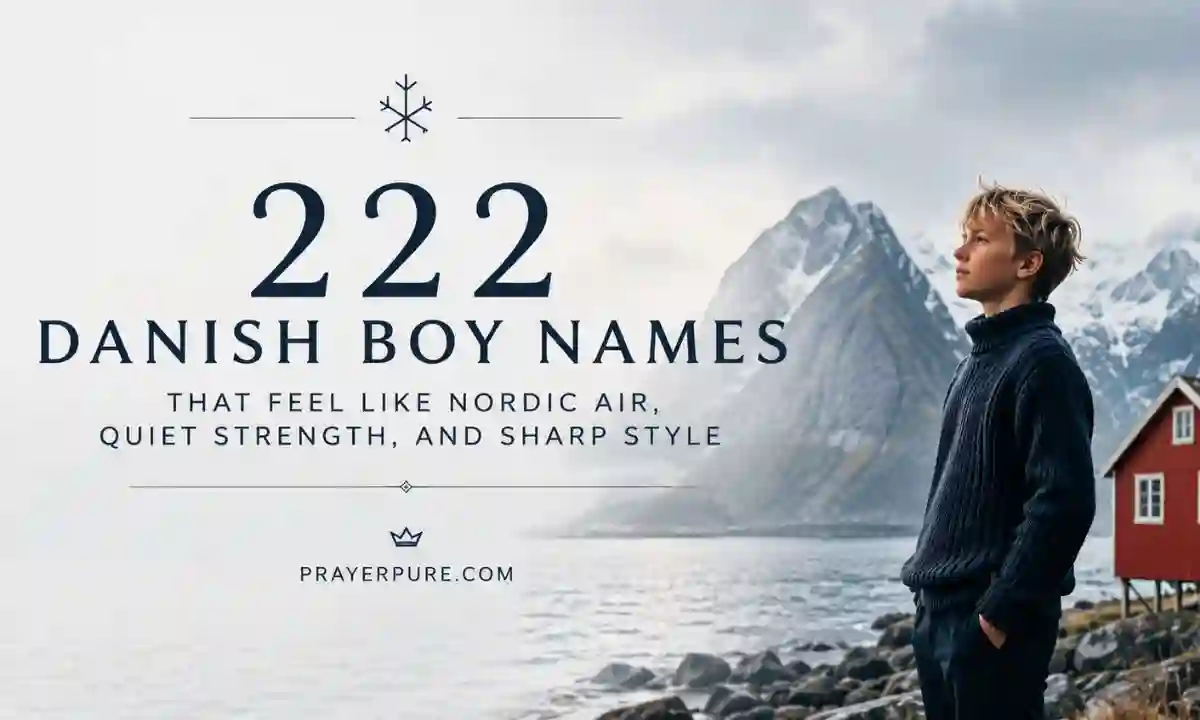
Whether you are of Danish heritage looking for a name that honors your roots, drawn to the clean Nordic aesthetic of Scandinavian naming, interested in names of genuine historical and mythological depth, or simply convinced that the best names are those that carry real substance beneath their sound, this list has 222 Danish boy names that feel like Nordic air, quiet strength, and sharp style. Meanings and origins are provided throughout.
Quick Info: Names ranked above 1000 on the SSA database are considered truly rare and unique. Names closer to 1 are among the most popular in the US today.
Danish Royal and Noble Names
Valdemar
- Origin: Old Norse/Germanic
- Meaning: Famous ruler, renowned power
- Popularity: above 1000
Valdemar carries the extraordinary royal heritage of four Danish kings including Valdemar I the Great whose reunification of Denmark and whose remarkable administrative and military achievements in the twelfth century made him one of the most celebrated figures in Danish medieval history. The famous ruler meaning perfectly captures the quality of a name that has been worn by men who shaped the course of Danish civilization across eight centuries of continuous use.
Knud
- Origin: Old Norse
- Meaning: Knot, bold warrior
- Popularity: above 1000
Knud carries the extraordinary heritage of Canute the Great, the Danish king who ruled England, Denmark, Norway, and parts of Sweden simultaneously and whose famous command to the waves was not arrogance but a demonstration of the limits of royal power, making him one of the most philosophically interesting of all medieval monarchs. The knot meaning reflects the Norse understanding of connected, bound strength.
Frederik
- Origin: Germanic via Danish
- Meaning: Peaceful ruler, ruler of peace
- Popularity: above 1000
Frederik carries the extraordinary Danish royal heritage of nine Danish kings, the peaceful ruler meaning giving it a depth of governance and temperament that has been worn by the Danish royal house with remarkable consistency. The contemporary bearer of the name, King Frederik X of Denmark, maintains this royal tradition into the present day.
Kristian
- Origin: Greek via Danish
- Meaning: Follower of Christ, Christian
- Popularity: above 1000
Kristian carries the extraordinary Danish royal heritage of ten Danish kings named Christian, the follower of Christ meaning giving it a depth of religious identity and royal continuity that makes it one of the most historically weighted of all Danish royal names.
Christoffer
- Origin: Greek via Danish
- Meaning: Bearer of Christ, Christ carrier
- Popularity: above 1000
Christoffer carries the warm, bearer of Christ heritage in the specifically Danish spelling, worn by Danish kings and noblemen across centuries and carrying a particular quality of genuine devotional depth in the Danish Lutheran tradition.
Hans
- Origin: Hebrew via Danish
- Meaning: God is gracious
- Popularity: above 1000
Hans carries the extraordinary cultural heritage of the most quintessentially Danish of all short forms, the simplified Scandinavian version of Johannes that is simultaneously the most common Danish male name historically and the name of Hans Christian Andersen whose fairy tales are among the most beloved and most psychologically profound works of children’s literature ever written.
Magnus
- Origin: Latin via Danish
- Meaning: Great, the great one
- Popularity: above 1000
Magnus carries the extraordinary heritage of the great medieval Scandinavian royal name that was borne by Norwegian and Swedish kings as well as by the great saints of the Nordic church, the great and magnificent meaning giving it a settled, classical authority that feels simultaneously ancient and entirely contemporary.
Axel
- Origin: Hebrew via Danish
- Meaning: Father of peace, divine reward
- Popularity: #68
Axel carries the extraordinary heritage of the Danish form of Absalom the biblical son of David, worn by the great sixteenth century Danish church leader Archbishop Absalon who founded Copenhagen and whose political and military genius shaped the medieval Danish state. In contemporary use the name carries the clean, crisp Nordic quality and the rock music heritage through Axl Rose.
Holger
- Origin: Old Norse
- Meaning: Island spear, the island warrior
- Popularity: above 1000
Holger carries the extraordinary mythological heritage of Holger Danske, the legendary Danish hero who sleeps in the basement of Kronborg Castle and will wake to defend Denmark in its hour of greatest need, the island spear meaning perfectly capturing the maritime, defensive quality of the Danish warrior tradition.
Absalon
- Origin: Hebrew via Danish
- Meaning: Father of peace
- Popularity: above 1000
Absalon carries the extraordinary historical heritage of Archbishop Absalon the twelfth century Danish statesman, church leader, and warrior whose founding of Copenhagen and whose military campaigns against the Wends transformed Denmark into a major Baltic power, one of the most consequential figures in the entire history of Danish civilization.
Viking Age Danish Names
Ragnar
- Origin: Old Norse
- Meaning: Warrior’s counsel, army’s counsel
- Popularity: above 1000
Ragnar carries the extraordinary mythological and semi-legendary heritage of Ragnar Lothbrok the great Danish Viking whose raids on England and France in the ninth century and whose legendary sons who avenged his death are among the most dramatically told stories of the Viking Age, a name of genuine warrior counsel depth.
Harald
- Origin: Old Norse
- Meaning: Army leader, ruler of the army
- Popularity: above 1000
Harald carries the extraordinary royal heritage of Harald Bluetooth the Danish king who united Denmark and Norway and converted the Danes to Christianity, whose name was borrowed by the Bluetooth wireless technology standard as a symbol of the unification of communications protocols just as Harald unified Scandinavia.
Sweyn
- Origin: Old Norse
- Meaning: Young man, servant, or swine herder
- Popularity: above 1000
Sweyn carries the extraordinary Viking Age heritage of Sweyn Forkbeard the Danish king who conquered England in 1013 and whose brief reign as the first Danish King of England established the precedent that his son Knud the Great would fulfill, a name of genuine Viking conquest depth.
Björn
- Origin: Old Norse
- Meaning: Bear
- Popularity: above 1000
Björn carries the fierce, powerful heritage of the great Nordic bear name, the son of Ragnar Lothbrok bearing this name in the Viking sagas and the tennis legend Björn Borg whose ice-cool composure made his name synonymous with a particular kind of unflappable Scandinavian excellence.
Ivar
- Origin: Old Norse
- Meaning: Bow warrior, yew bow
- Popularity: above 1000
Ivar carries the extraordinary Viking Age heritage of Ivar the Boneless the great Danish Viking commander whose campaigns across England and Ireland in the ninth century were among the most dramatic of the entire Viking Age, the bow warrior meaning connecting him to the most precise and skilled of all Viking weapons.
Sigurd
- Origin: Old Norse
- Meaning: Victory guardian, victorious protection
- Popularity: above 1000
Sigurd carries the extraordinary saga heritage of the great Norse dragon slayer whose knowledge of the language of birds, gained through accidentally tasting Fafnir’s blood, gave him a quality of secret understanding that defines a certain kind of legendary hero.
Ulf
- Origin: Old Norse
- Meaning: Wolf
- Popularity: above 1000
Ulf carries the fierce, elemental heritage of the wolf meaning in one of the most ancient and most consistent of all Viking Age names, the wolf being simultaneously the most feared predator of the Nordic landscape and the most honored companion of Odin in the Norse divine tradition.
Gunnar
- Origin: Old Norse
- Meaning: Bold warrior, battle warrior
- Popularity: above 1000
Gunnar carries the extraordinary saga heritage of the great Norse warrior whose skill and courage made him legendary in the Icelandic sagas, the bold warrior meaning capturing the particular quality of Viking Age martial excellence.
Leif
- Origin: Old Norse
- Meaning: Heir, descendant, beloved
- Popularity: above 1000
Leif carries the extraordinary explorer heritage of Leif Eiriksson who reached North America centuries before Columbus and whose voyage across the Atlantic is one of the most remarkable feats of Viking Age navigation, a name of genuine explorer depth.
Rolf
- Origin: Old Norse
- Meaning: Famous wolf, renowned wolf
- Popularity: above 1000
Rolf carries the extraordinary Viking Age heritage of the great Norse chieftain Rollo whose conquest of northern France established the Duchy of Normandy and whose descendants became the kings of England after the Conquest of 1066, a name of genuine dynasticViking depth.
Asbjørn
- Origin: Old Norse
- Meaning: Divine bear, god’s bear
- Popularity: above 1000
Asbjørn carries the extraordinary divine animal heritage of the god’s bear meaning, combining the Aesir divine prefix with the bear that was the most powerful creature of the Nordic landscape.
Eskil
- Origin: Old Norse
- Meaning: Divine cauldron, god’s cauldron
- Popularity: above 1000
Eskil carries the extraordinary mythological heritage of the divine cauldron meaning, the cauldron being one of the most important magical objects in the Norse and broader Celtic mythological tradition whose divine heat transformed and renewed.
Fri
- Origin: Old Norse
- Meaning: Free, the free one
- Popularity: above 1000
Fri carries the clean, minimal heritage of the free meaning in one of the most ancient and most fundamental of all human values expressed as a name of absolute Nordic brevity.
Gorm
- Origin: Old Norse
- Meaning: He who worships God, divine man
- Popularity: above 1000
Gorm carries the extraordinary Danish royal heritage of Gorm the Old the first historical king of Denmark whose reign in the early tenth century established the foundation of the Danish monarchy that continues to the present day, a name of genuine dynastic and historical depth.
Halfdan
- Origin: Old Norse
- Meaning: Half Dane, the half Dane
- Popularity: above 1000
Halfdan carries the extraordinary Viking Age heritage of several important Norse rulers including Halfdan the Black the father of Harald Fairhair the first king of Norway, a name of genuine Norse historical depth.
Classic Danish Names From the Christian Tradition
Jens
- Origin: Hebrew via Danish
- Meaning: God is gracious
- Popularity: above 1000
Jens carries the extraordinary heritage of the most quintessentially Danish of all names, the specifically Danish short form of Johannes that has been used continuously in Denmark for centuries and that carries a particular warmth and accessibility that makes it feel simultaneously ancient and entirely contemporary.
Lars
- Origin: Latin via Danish
- Meaning: From Laurentum, the laurel place
- Popularity: above 1000
Lars carries the warm, Scandinavian heritage of the laurel place meaning in the specifically Danish and Scandinavian short form of Laurentius, a name that has been used continuously in Denmark and that carries the particular clean, crisp quality of Nordic one-syllable masculine names.
Niels
- Origin: Greek via Danish
- Meaning: Victory of the people
- Popularity: above 1000
Niels carries the extraordinary scientific heritage of Niels Bohr whose quantum mechanical model of the atom was one of the most important contributions to twentieth century physics and who represented the best of Danish intellectual culture, combined with the warm, specifically Danish quality of the Scandinavian form of Nicholas.
Peder
- Origin: Greek via Danish
- Meaning: Rock, stone
- Popularity: above 1000
Peder carries the warm, specifically Danish quality of the Scandinavian form of Peter, the apostolic rock and stone meaning giving it a depth of solid, grounded authority that has been worn in Denmark continuously from the medieval period.
Anders
- Origin: Greek via Danish
- Meaning: Manly, masculine, brave
- Popularity: above 1000
Anders carries the warm, masculine heritage of the brave meaning in the specifically Scandinavian form of Andrew, one of the most consistently used names in the Danish tradition and the name of one of the most beloved figures in Danish cultural life through the story of the little mermaid and other Andersen tales.
Mads
- Origin: Hebrew via Danish
- Meaning: Gift of God
- Popularity: above 1000
Mads carries the warm, specifically Danish quality of the Scandinavian short form of Matthias, a name that is essentially unknown outside the Danish and broader Scandinavian tradition but that carries a particular warmth and accessibility that makes it one of the most characteristically Danish of all masculine names.
Rasmus
- Origin: Greek via Danish
- Meaning: Beloved, well-beloved
- Popularity: above 1000
Rasmus carries the warm, specifically Scandinavian quality of the beloved meaning and the cultural heritage of Erasmus of Rotterdam whose humanist scholarship influenced the entire course of European intellectual history, one of the most warmly accessible of all distinctively Scandinavian names.
Søren
- Origin: Latin via Danish
- Meaning: Stern, severe, or beautiful
- Popularity: above 1000
Søren carries the extraordinary philosophical heritage of Søren Kierkegaard whose existentialist philosophy shaped the entire course of modern thought and who is one of the most important Danish intellectuals in history, combined with the specifically Danish quality of the nasal vowel that makes this name impossible to fully approximate outside the Nordic languages.
Mikkel
- Origin: Hebrew via Danish
- Meaning: Who is like God
- Popularity: above 1000
Mikkel carries the warm, specifically Danish quality of the Scandinavian form of Michael, the archangel’s name in its most Nordic form carrying a particular crispness and accessibility that is characteristic of the Danish naming tradition.
Villads
- Origin: Germanic via Danish
- Meaning: Resolute protector
- Popularity: above 1000
Villads carries the warm, specifically Danish quality of the Scandinavian form of Willibald, a name that is essentially unknown outside the Danish tradition but that carries a particular historical and religious depth through the great Anglo-Saxon missionary saint whose name was Scandinavianized into this distinctive form.
Bent
- Origin: Latin via Danish
- Meaning: Blessed
- Popularity: above 1000
Bent carries the warm, specifically Danish quality of the Scandinavian short form of Benedict, the blessed meaning giving it a depth of genuine Benedictine monastic heritage in a name that is entirely characteristic of the Danish tradition of compressing Latin names into their most accessible Nordic forms.
Ejnar
- Origin: Old Norse
- Meaning: One warrior, lone fighter
- Popularity: above 1000
Ejnar carries the warm, specifically Danish quality of the Old Norse lone warrior meaning in the Danish spelling that differs slightly from the Norwegian Einar, a name of genuine Viking warrior depth in a distinctively Danish form.
Vagn
- Origin: Old Norse
- Meaning: Wagon, vehicle
- Popularity: above 1000
Vagn carries the warm, specifically Danish quality of the wagon meaning in a name that is essentially unknown outside the Scandinavian tradition but that carries the particular Old Norse connection to movement, journey, and the practical transportation of the Viking world.
Aage
- Origin: Old Norse
- Meaning: Forebear, ancestor
- Popularity: above 1000
Aage carries the warm, ancestral heritage of the forebear meaning in one of the most distinctively Danish of all names, the double vowel spelling giving it a phonetic quality that is characteristic of the Danish language’s distinctive vowel system.
Einer
- Origin: Old Norse
- Meaning: One warrior, lone fighter
- Popularity: above 1000
Einer carries the same lone warrior heritage as Ejnar in a slightly different spelling, both forms being characteristic of the Danish tradition’s treatment of Old Norse names.
Contemporary Popular Danish Names
Oliver
- Origin: Latin/French
- Meaning: Olive tree, elf army
- Popularity: #3
Oliver carries the warm, Mediterranean heritage of the olive tree meaning in a name that has been one of the most popular in Denmark for several consecutive years, simultaneously reflecting the broader European fashion for this name and the Danish tradition of embracing international names with genuine warmth.
Noah
- Origin: Hebrew
- Meaning: Rest, comfort, peace
- Popularity: above 1000
Noah carries the extraordinary biblical heritage of the great flood survivor and ark builder in a name that has been enormously popular in contemporary Denmark, the rest and comfort meaning suiting the particular Danish appreciation for simplicity and calm.
Liam
- Origin: Irish via Danish
- Meaning: Resolute protector
- Popularity: above 1000
Liam carries the warm, protective heritage of the resolute guardian meaning in a name that has been enthusiastically adopted in contemporary Denmark, reflecting the global appeal of this Irish short form.
Emil
- Origin: Latin via Danish
- Meaning: Rival, industrious, striving
- Popularity: above 1000
Emil carries the warm, industrious heritage of the striving meaning and the extraordinary literary heritage of Emil of Lönneberga the beloved Swedish children’s character created by Astrid Lindgren, a name of genuine Scandinavian cultural depth.
Victor
- Origin: Latin
- Meaning: Conqueror, victorious
- Popularity: above 1000
Victor carries the warm, triumphal heritage of the victorious meaning in a name that has been consistently popular in Denmark and that carries the classical Latin depth of the great Roman victory tradition.
William
- Origin: Germanic
- Meaning: Resolute protector, determined guardian
- Popularity: above 1000
William carries the extraordinary heritage of one of the most internationally beloved of all Germanic names in a form that has been enthusiastically adopted in contemporary Denmark, particularly through the Danish royal connection to the British royal family.
August
- Origin: Latin
- Meaning: Great, venerable, magnificent
- Popularity: above 1000
August carries the warm, classical heritage of the great Roman emperor’s name in a form that has been consistently popular in Denmark and that carries the particular quality of the late summer month whose long, warm evenings are among the most beloved aspects of the Danish calendar.
Luca
- Origin: Italian/Latin
- Meaning: Light, born at dawn
- Popularity: above 1000
Luca carries the warm, luminous heritage of the light meaning in the Italian form that has been enthusiastically adopted in contemporary Denmark, reflecting the global appeal of this Mediterranean name.
Elliot
- Origin: Hebrew via English
- Meaning: My God is Yahweh
- Popularity: above 1000
Elliot carries the warm, slightly literary heritage of the biblical meaning in the English surname form that has been enthusiastically adopted in contemporary Danish naming.
Elias
- Origin: Hebrew/Greek
- Meaning: My God is Yahweh
- Popularity: above 1000
Elias carries the extraordinary prophetic heritage of the great Elijah in the Greek form that has been consistently popular in Denmark and that carries the warm, accessible quality of one of the most beloved biblical names in the Scandinavian tradition.
Albert
- Origin: Germanic
- Meaning: Noble bright, illustrious nobility
- Popularity: above 1000
Albert carries the warm, noble heritage of the illustrious brightness meaning in a name of genuine Danish royal connection through Prince Albert and the broader European aristocratic tradition.
Arthur
- Origin: Celtic
- Meaning: Bear man, or noble thoroughfare
- Popularity: above 1000
Arthur carries the extraordinary Arthurian mythological heritage in a name that has been enthusiastically adopted in contemporary Denmark, the legendary king’s story resonating across European cultures.
Max
- Origin: Latin
- Meaning: Greatest, the greatest
- Popularity: above 1000
Max carries the warm, superlative heritage of the greatest meaning in one of the cleanest and most minimal of all contemporary popular Danish names.
Felix
- Origin: Latin
- Meaning: Happy, fortunate, lucky
- Popularity: above 1000
Felix carries the warm, fortunate heritage of the happy and lucky meaning in one of the most consistently appealing of all Latin names adopted in contemporary Danish naming.
Tobias
- Origin: Hebrew via Danish
- Meaning: God is good
- Popularity: above 1000
Tobias carries the warm, divine goodness heritage of the God is good meaning in the Scandinavian form that has been consistently popular in Denmark and that carries the apocryphal biblical depth of the story of Tobit and his son Tobias.
Danish Literary and Cultural Names
Hans
Already celebrated above through the Andersen heritage.
Søren
Already celebrated above through the Kierkegaard heritage.
Carl
- Origin: Germanic via Danish
- Meaning: Free man, strong
- Popularity: above 1000
Carl carries the extraordinary Danish cultural heritage of Carl Nielsen the great Danish composer whose six symphonies and whose operas are the greatest achievements of Danish classical music and who represents the particular combination of democratic, popular, and deeply serious aesthetic values that is characteristic of the Danish cultural tradition.
Georg
- Origin: Greek via Danish
- Meaning: Farmer, earth worker
- Popularity: above 1000
Georg carries the warm, agricultural heritage of the farmer meaning and the specific Danish cultural connection to Georg Brandes the great nineteenth century literary critic whose Modern Breakthrough transformed Scandinavian literature by introducing European realism and naturalism to the Nordic world.
Holger
Already celebrated above through the Holger Danske heritage.
Henrik
- Origin: Germanic via Danish
- Meaning: Home ruler, ruler of the estate
- Popularity: above 1000
Henrik carries the extraordinary theatrical and literary heritage of Henrik Ibsen the great Norwegian-born playwright whose works including A Doll’s House and Peer Gynt transformed European drama and whose influence on world theater is equaled only by Shakespeare, a name that carries the particular Nordic combination of domestic authority and revolutionary vision.
Jeppe
- Origin: Hebrew via Danish
- Meaning: God will add, the Danish form of Jacob
- Popularity: above 1000
Jeppe carries the warm, specifically Danish quality of the Scandinavian short form of Jakob in a name that is essentially unknown outside the Danish tradition and that carries the literary heritage of Jeppe of the Hill the great Holberg comedy.
Ludvig
- Origin: Germanic via Danish
- Meaning: Famous warrior, renowned in battle
- Popularity: above 1000
Ludvig carries the extraordinary theatrical heritage of Ludvig Holberg the great eighteenth century Danish-Norwegian playwright and historian whose comedies are the foundation of Danish dramatic literature and whose intellectual range connecting law, history, philosophy, and theatrical satire made him the most versatile Danish intellectual of the Enlightenment.
Halfdan
Already celebrated above through the Viking Age heritage.
Troels
- Origin: Old Norse via Danish
- Meaning: The Norse form of Thor’s arrow
- Popularity: above 1000
Troels carries the warm, specifically Danish quality of one of the most distinctively Danish of all names, essentially unknown outside the Nordic tradition and carrying the mythological connection to the great thunder god’s weapon.
Bjarke
- Origin: Old Norse via Danish
- Meaning: Little bear, young bear
- Popularity: above 1000
Bjarke carries the warm, specifically Danish quality of the little bear meaning in a name that is one of the most characteristically Danish of all contemporary names, carrying the Viking Age animal naming tradition in a modern Danish form.
Viggo
- Origin: Old Norse via Danish
- Meaning: Battle, warrior
- Popularity: above 1000
Viggo carries the warm, warrior heritage of the battle meaning in the Danish form, known internationally through the celebrated Danish-American actor Viggo Mortensen whose roles in The Lord of the Rings trilogy made this name internationally recognizable.
Danish Nature and Landscape Names
Birk
- Origin: Old Norse via Danish
- Meaning: Birch tree
- Popularity: above 1000
Birk carries the clean, luminous heritage of the birch tree meaning in one of the most minimal and most characteristically Nordic of all nature names, the birch’s pale, glowing bark and its association with the Scandinavian forest landscape giving this name a particular Nordic quality.
Elm
- Origin: English/Germanic
- Meaning: The elm tree
- Popularity: above 1000
Elm carries the clean, arboreal heritage of the great elm tree meaning in three letters of absolute natural simplicity and genuine Nordic depth.
Hav
- Origin: Danish
- Meaning: Sea, ocean
- Popularity: above 1000
Hav carries the extraordinary maritime heritage of the sea meaning in the Danish word itself used as a name, a name of pure Nordic ocean depth in three clean letters that carries the entire Danish relationship with the surrounding sea.
Klint
- Origin: Danish
- Meaning: Cliff, steep cliff face
- Popularity: above 1000
Klint carries the dramatic geological heritage of the cliff meaning and the specific Danish association with the great white chalk cliffs of Møn whose dramatic presence on the Danish coastal landscape has inspired painters and writers for centuries.
Skov
- Origin: Danish
- Meaning: Forest, woods
- Popularity: above 1000
Skov carries the warm, arboreal heritage of the forest meaning in the Danish word itself used as a name, a name of pure Nordic woodland depth in four clean letters.
Sol
- Origin: Old Norse/Latin
- Meaning: Sun
- Popularity: above 1000
Sol carries the warm, solar heritage of the sun meaning in the Old Norse and Latin tradition, the Norse sun goddess Sól whose chariot carries the sun across the sky giving this name a mythological depth alongside its natural luminosity.
Sten
- Origin: Old Norse via Danish
- Meaning: Stone, rock
- Popularity: above 1000
Sten carries the warm, geological heritage of the stone meaning in one of the most characteristically Nordic of all nature names, the stone being both the most fundamental feature of the Scandinavian landscape and a symbol of enduring, unmoving strength.
Tor
- Origin: Old Norse
- Meaning: Thunder, or a rocky outcrop
- Popularity: above 1000
Tor carries the extraordinary mythological and natural heritage of both the thunder meaning connected to the great Norse thunder god and the rocky outcrop that rises above the landscape with a commanding, dramatic presence.
Vind
- Origin: Danish
- Meaning: Wind
- Popularity: above 1000
Vind carries the clean, atmospheric heritage of the wind meaning in the Danish word itself used as a name, a name of pure Nordic elemental depth in four clean letters.
Ø
- Origin: Danish
- Meaning: Island
- Popularity: above 1000
Ø carries the extraordinary minimal quality of the Danish word for island in a single letter that is simultaneously the most minimal possible name and the most distinctively Danish, the island meaning carrying the entire Danish relationship with the sea and the particular quality of the small, circumscribed, intensely inhabitable space that the island represents.
Rare and Unusual Danish Names
Absalon
Already celebrated above through the historical heritage.
Agner
- Origin: Old Norse via Danish
- Meaning: Edge, point of a weapon
- Popularity: above 1000
Agner carries the warm, specifically Danish quality of the weapon edge meaning in a name that is essentially unknown outside the Danish tradition and that carries the precise, cutting quality of the well-made blade.
Aksel
- Origin: Hebrew via Danish
- Meaning: Father of peace, divine reward
- Popularity: above 1000
Aksel carries the same extraordinary heritage as Axel in the specifically Danish spelling that preserves the K sound more accurately than the German-influenced Axel form, one of the most authentically Danish of all name spellings.
Aslak
- Origin: Old Norse
- Meaning: God’s play, divine game
- Popularity: above 1000
Aslak carries the extraordinary mythological heritage of the divine play meaning in one of the more unusual Old Norse names that survived into the contemporary Danish tradition, the idea of the divine game carrying a philosophical depth about the nature of cosmic creation.
Asser
- Origin: Old Norse/Hebrew
- Meaning: Happy, blessed, or the tribe of Asher
- Popularity: above 1000
Asser carries the extraordinary dual heritage of the Old Norse happy meaning and the Hebrew tribal meaning of the blessed tribe of Asher and the historical heritage of Asser the twelfth century Archbishop of Lund whose political and ecclesiastical influence shaped the Danish church.
Broder
- Origin: Old Norse via Danish
- Meaning: Brother
- Popularity: above 1000
Broder carries the warm, familial heritage of the brother meaning in one of the most fundamentally relational of all Danish names, the brotherhood concept carrying both its literal familial meaning and its broader sense of male friendship and solidarity.
Bugge
- Origin: Old Norse via Danish
- Meaning: Unknown Norse origin, possibly related to bog
- Popularity: above 1000
Bugge carries the warm, specifically Danish quality of one of the more unusual Old Norse names that survived into the Danish tradition, a name of genuine historical depth through the Danish Viking Age.
Buris
- Origin: Old Norse
- Meaning: Unknown Norse origin
- Popularity: above 1000
Buris carries the warm, specifically Danish quality of an Old Norse name that appears in the medieval Danish historical tradition.
Ebbe
- Origin: Germanic via Danish
- Meaning: Strength of a wild boar
- Popularity: above 1000
Ebbe carries the fierce, animal heritage of the boar’s strength meaning in one of the most characteristically Danish of all names, the wild boar being one of the most important animals in the Norse hunting and mythological tradition.
Eigil
- Origin: Old Norse
- Meaning: Edge of a weapon, one who bears the edge
- Popularity: above 1000
Eigil carries the precise, martial heritage of the weapon edge meaning and the extraordinary saga heritage of Egil Skallagrímsson the great Viking Age skald and warrior whose poetry is among the finest of the Old Norse literary tradition.
Eluf
- Origin: Old Norse via Danish
- Meaning: Always alive, ever-living
- Popularity: above 1000
Eluf carries the extraordinary heritage of the always alive and ever-living meaning in one of the most characteristically Danish of all Old Norse survival names, a name of genuine immortality depth.
Emmerik
- Origin: Germanic via Danish
- Meaning: Work power, powerful in work
- Popularity: above 1000
Emmerik carries the warm, working heritage of the powerful work meaning in the Danish form of the Germanic Emmerich, one of the less commonly known Danish names that carries genuine historical depth.
Erlend
- Origin: Old Norse via Danish
- Meaning: Foreigner, stranger
- Popularity: above 1000
Erlend carries the warm, slightly paradoxical heritage of the foreigner and stranger meaning in a name that has been warmly used in the Scandinavian tradition, the stranger meaning carrying the quality of someone who arrives from outside and brings new perspectives.
Esben
- Origin: Old Norse via Danish
- Meaning: Divine bear, god’s bear
- Popularity: above 1000
Esben carries the warm, divine animal heritage of the god’s bear meaning in one of the most characteristically Danish of all Old Norse names, the Danish form distinguishable from the Norwegian Esbjørn by its specifically Danish phonetic quality.
Falk
- Origin: Old Norse/Germanic via Danish
- Meaning: Falcon, the falcon bird
- Popularity: above 1000
Falk carries the fierce, aerial heritage of the falcon meaning in one of the Old Norse bird names that survived into the Danish tradition, the falcon being one of the most important birds in the Norse aristocratic hunting tradition.
Falko
- Origin: Germanic via Danish
- Meaning: Falcon
- Popularity: above 1000
Falko carries the same falcon heritage as Falk in the Germanic form, a name of genuine aerial predator depth.
Flemming
- Origin: Germanic via Danish
- Meaning: Person from Flanders
- Popularity: above 1000
Flemming carries the warm, geographical heritage of the Flemish person meaning in one of the most distinctively Danish of all names, the Flemish connection reflecting the close medieval relationship between Denmark and the Low Countries through the Hanseatic trade.
Folke
- Origin: Old Norse via Danish
- Meaning: People, folk, the common people
- Popularity: above 1000
Folke carries the warm, democratic heritage of the common people meaning in one of the genuinely Nordic names that expresses the Scandinavian political tradition’s deep commitment to the dignity of ordinary people.
Frode
- Origin: Old Norse via Danish
- Meaning: Wise, learned, knowing
- Popularity: above 1000
Frode carries the extraordinary philosophical heritage of the wise and knowing meaning in one of the most characteristically Danish of all Old Norse names, the wisdom meaning connecting it to the deep Norse tradition of valuing knowledge as the highest personal quality.
Gunnar
Already celebrated in the Viking Age section.
Halfdan
Already celebrated in the Viking Age section.
Herluf
- Origin: Old Norse via Danish
- Meaning: Army wolf, warrior wolf
- Popularity: above 1000
Herluf carries the fierce, warrior heritage of the army wolf meaning in one of the distinctively Danish names that combines the military and animal traditions of the Old Norse naming.
Hjalmar
- Origin: Old Norse via Danish
- Meaning: Helmeted warrior, the warrior in the helmet
- Popularity: above 1000
Hjalmar carries the extraordinary warrior heritage of the helmeted fighter meaning in one of the Old Norse names that survived into the Danish tradition, the helmet being the most important and most expensive item of Viking Age military equipment.
Hjort
- Origin: Old Norse via Danish
- Meaning: Deer, the stag
- Popularity: above 1000
Hjort carries the warm, animal heritage of the stag meaning in the specifically Danish word for the deer, a name of genuine Nordic natural depth.
Hother
- Origin: Old Norse via Danish
- Meaning: Fighter, warrior
- Popularity: above 1000
Hother carries the extraordinary mythological heritage of the figure in the Norse myth who killed Baldur with a mistletoe spear, one of the most dramatically told stories of the Norse tradition and a name of genuine mythological depth.
Ingemar
- Origin: Old Norse via Danish
- Meaning: Famous son of Ing, Ing’s sea warrior
- Popularity: above 1000
Ingemar carries the warm, divine heritage of the famous son of the Norse god Ing in one of the Old Norse names that survived into the Danish tradition.
Ingolf
- Origin: Old Norse
- Meaning: Ing’s wolf, the wolf of Ing
- Popularity: above 1000
Ingolf carries the extraordinary heritage of the first permanent Norse settler of Iceland whose name combines the great Norse god Ing with the wolf that was his companion, a name of genuine pioneering Norse depth.
Iver
- Origin: Old Norse via Danish
- Meaning: Bow warrior, yew bow
- Popularity: above 1000
Iver carries the warm, specifically Danish quality of the bow warrior meaning in the Danish form that differs slightly from the Norwegian Ivar, a name of genuine Nordic archery heritage.
Jeppe
Already celebrated above through the Holberg heritage.
Joakim
- Origin: Hebrew via Danish
- Meaning: God will establish, raised by God
- Popularity: above 1000
Joakim carries the warm, devotional heritage of the God will establish meaning in the specifically Scandinavian form of Joachim, a name of genuine biblical and devotional depth in the Danish tradition.
Kaj
- Origin: Old Norse/Latin via Danish
- Meaning: Earth, or rejoice
- Popularity: above 1000
Kaj carries the warm, elemental heritage of the earth meaning and the joyful heritage of the rejoice meaning in one of the most minimal and most characteristically Danish of all names, the three-letter quality giving it an absolute Nordic crispness.
Kasper
- Origin: Persian via Danish
- Meaning: Treasurer, keeper of the treasure
- Popularity: above 1000
Kasper carries the warm, Danish quality of the treasurer meaning in the Scandinavian spelling of Caspar, one of the traditional names of the three wise men that entered the Danish naming tradition through the medieval Catholic calendar.
Kjeld
- Origin: Old Norse via Danish
- Meaning: Cauldron, kettle, vessel
- Popularity: above 1000
Kjeld carries the warm, specifically Danish quality of the cauldron meaning in one of the most characteristically Danish of all Old Norse names, the sacred vessel being one of the most important mythological objects in the Norse and Celtic traditions.
Knud
Already celebrated in the royal section through the Canute heritage.
Kresten
- Origin: Greek via Danish
- Meaning: Follower of Christ
- Popularity: above 1000
Kresten carries the warm, specifically Danish quality of the Christ follower meaning in one of the more unusual Danish forms of the Christian tradition, carrying a phonetic quality that is entirely characteristic of the Danish language.
Kristoffer
- Origin: Greek via Danish
- Meaning: Bearer of Christ
- Popularity: above 1000
Kristoffer carries the warm, Danish quality of the Christ bearer meaning in the specifically Danish spelling that differs slightly from the Norwegian Kristoffer and the German Christoph.
Laurids
- Origin: Latin via Danish
- Meaning: From Laurentum, the laurel place
- Popularity: above 1000
Laurids carries the warm, specifically Danish quality of the laurel place meaning in one of the most distinctively Danish of all forms of the Laurentius tradition, a name that is essentially unknown outside the Danish naming culture.
Lavrans
- Origin: Latin via Danish
- Meaning: From Laurentum
- Popularity: above 1000
Lavrans carries the warm, specifically Danish quality of another distinctively Danish form of the Laurentius tradition, known internationally through the medieval Norwegian novel Kristin Lavransdatter.
Loke
- Origin: Old Norse via Danish
- Meaning: The trickster god, or closed, locked
- Popularity: above 1000
Loke carries the extraordinary mythological heritage of the great Norse trickster in the Danish spelling, the closed and locked meaning reflecting the enigmatic, shape-shifting quality of the most dramatically complex figure in the Norse pantheon.
Ludvig
Already celebrated above through the Holberg heritage.
Mikkel
Already celebrated above in the Christian tradition section.
Morten
- Origin: Latin via Danish
- Meaning: Of Mars, the warrior, or from the sea
- Popularity: above 1000
Morten carries the warm, martial heritage of the Mars warrior meaning in the specifically Danish form of Martin, one of the most consistently used Danish names whose warrior meaning sits comfortably in the Viking Age heritage while its Latin origin reflects the Christian tradition.
Niels
Already celebrated above through the Bohr heritage.
Nis
- Origin: Old Norse via Danish
- Meaning: Short form of Niels or Dennis
- Popularity: above 1000
Nis carries the warm, minimal quality of the Danish short form in three clean letters and the specific cultural heritage of the nisse, the Danish household spirit or gnome of folklore, giving it a slightly magical quality entirely characteristic of the Danish fairy tale tradition.
Oluf
- Origin: Old Norse via Danish
- Meaning: Ancestor’s relic, holy relic
- Popularity: above 1000
Oluf carries the warm, specifically Danish quality of the ancestor’s relic meaning in the Danish form of Olaf, the specifically Danish phonetic transformation of the great Scandinavian royal name.
Orm
- Origin: Old Norse via Danish
- Meaning: Serpent, worm, dragon
- Popularity: above 1000
Orm carries the extraordinary mythological heritage of the serpent and dragon meaning in one of the most ancient of all Norse animal names, the serpent being simultaneously the great cosmic Midgard Serpent of Norse mythology and the most fundamental symbol of wisdom and transformation in the broader European tradition.
Oskar
- Origin: Old Norse/Irish via Danish
- Meaning: God’s spear, or lover of deer
- Popularity: above 1000
Oskar carries the warm, dual heritage of the divine spear meaning from the Old Norse tradition and the lover of deer meaning from the Irish tradition, and the extraordinary cultural heritage of Oscar Wilde whose theatrical brilliance made this name carry a permanent quality of witty, brilliant, slightly dangerous aesthetic depth.
Palle
- Origin: Latin via Danish
- Meaning: From Paulus, small
- Popularity: above 1000
Palle carries the warm, specifically Danish quality of the small meaning in the Danish short form that is essentially unknown outside the Nordic tradition and that carries a particular warm familiarity that makes it one of the most approachable of all distinctively Danish names.
Per
- Origin: Greek via Danish
- Meaning: Rock, stone
- Popularity: above 1000
Per carries the warm, specifically Scandinavian quality of the stone meaning in the Danish short form of Peter, one of the most minimal and most characteristically Nordic of all masculine names in three clean letters.
Poul
- Origin: Latin via Danish
- Meaning: Small, humble
- Popularity: above 1000
Poul carries the warm, specifically Danish quality of the small and humble meaning in the Danish form of Paul, the apostolic name in its most distinctively Scandinavian phonetic form.
Preben
- Origin: Old Norse via Danish
- Meaning: Unknown Norse origin
- Popularity: above 1000
Preben carries the warm, specifically Danish quality of one of the most distinctively Danish of all names, essentially unknown outside the Nordic tradition and carrying a particular historical depth through the medieval Danish naming culture.
Rask
- Origin: Danish
- Meaning: Quick, agile, fast
- Popularity: above 1000
Rask carries the warm, dynamic heritage of the quick and agile meaning and the cultural heritage of Rasmus Rask the great Danish linguist who was one of the founders of the science of comparative linguistics and whose grammatical analyses of Old Norse and related languages transformed the study of language history.
Roar
- Origin: Old Norse via Danish
- Meaning: Praiser, the one who praises
- Popularity: above 1000
Roar carries the warm, celebratory heritage of the praiser meaning in one of the distinctively Scandinavian names, the praising quality connecting it to the Norse skaldic tradition of the court poet whose praise of warrior deeds preserved them in memory.
Rolf
Already celebrated in the Viking Age section through the Rollo heritage.
Ruben
- Origin: Hebrew via Danish
- Meaning: Behold, a son
- Popularity: above 1000
Ruben carries the warm, biblical heritage of the behold a son meaning in the Danish form of the great patriarch’s name, one of the consistently used biblical names in the Danish Lutheran tradition.
Rudolf
- Origin: Germanic via Danish
- Meaning: Famous wolf, renowned wolf
- Popularity: above 1000
Rudolf carries the warm, wolf heritage of the famous wolf meaning in the Germanic form that has been used in Denmark and that carries both the warrior wolf tradition and the cultural heritage of the beloved Christmas reindeer.
Stig
- Origin: Old Norse via Danish
- Meaning: Path, wanderer, one who travels the path
- Popularity: above 1000
Stig carries the warm, directional heritage of the path and wandering meaning in one of the most characteristically Scandinavian of all names, the path meaning connecting it to the deep Norse appreciation for the journey as one of the most meaningful human activities.
Svend
- Origin: Old Norse via Danish
- Meaning: Young man, servant
- Popularity: above 1000
Svend carries the warm, specifically Danish quality of the young man meaning in the Danish form of the Old Norse name, one of the most characteristically Danish of all names whose consistent use across the Danish historical tradition makes it one of the most fundamentally Danish masculine names.
Søren
Already celebrated above through the Kierkegaard heritage.
Theodor
- Origin: Greek via Danish
- Meaning: Gift of God
- Popularity: above 1000
Theodor carries the warm, divine heritage of the gift of God meaning in the Danish form, and the cultural heritage of the great Danish families who bore this name across the nineteenth century period of Danish cultural flourishing.
Thorvald
- Origin: Old Norse via Danish
- Meaning: Thor’s ruler, ruler with Thor’s power
- Popularity: above 1000
Thorvald carries the extraordinary Viking Age heritage of the Thor-ruler name, the great thunder god’s power combined with the ruling tradition in one of the most fundamentally Norse of all compound names.
Torkil
- Origin: Old Norse via Danish
- Meaning: Thor’s cauldron, Thor’s kettle
- Popularity: above 1000
Torkil carries the extraordinary mythological heritage of Thor’s cauldron, the divine vessel of the great thunder god combining the heat and transformation of the sacred vessel with the elemental power of the Norse thunder deity.
Troels
Already celebrated in the literary and cultural section.
Tue
- Origin: Old Norse via Danish
- Meaning: The Norse form of Tyr, the war god
- Popularity: above 1000
Tue carries the extraordinary mythological heritage of the Norse war god Tyr whose sacrifice of his hand to bind the great wolf Fenrir made him the symbol of the kind of courage that accepts personal sacrifice for the greater good, a name of genuine mythological depth in three clean letters.
Tyge
- Origin: Old Norse via Danish
- Meaning: Unknown Norse origin, related to Tycho
- Popularity: above 1000
Tyge carries the extraordinary scientific heritage of the Danish astronomer Tycho Brahe whose birth name in its Danish form was Tyge and whose naked-eye astronomical observations before the invention of the telescope were the most accurate of the pre-modern era.
Uffe
- Origin: Old Norse via Danish
- Meaning: Unknown Norse origin
- Popularity: above 1000
Uffe carries the warm, specifically Danish quality of one of the most distinctively Danish of all names, essentially unknown outside the Nordic tradition and carrying the particular historical depth of the medieval Danish legendary tradition.
Ulrik
- Origin: Germanic via Danish
- Meaning: Prosperity and power, wealthy ruler
- Popularity: above 1000
Ulrik carries the warm, powerful heritage of the prosperity and ruling meaning in the Danish form of Ulrich, worn by Danish noblemen and military figures across several centuries of Danish history.
Vagn
Already celebrated in the Christian tradition section.
Valdemar
Already celebrated in the royal section.
Villads
Already celebrated in the Christian tradition section.
Villy
- Origin: Germanic via Danish
- Meaning: Resolute protector, the Danish diminutive of Wilhelm
- Popularity: above 1000
Villy carries the warm, specifically Danish quality of the diminutive form of Wilhelm in a name that is essentially unknown outside the Danish tradition and that carries a particular warm familiarity.
Walther
- Origin: Germanic
- Meaning: Ruler of the army
- Popularity: above 1000
Walther carries the warm, military heritage of the army ruler meaning in the Germanic form, used in Denmark particularly in the context of the German cultural influence that shaped Danish culture through the Schleswig-Holstein connection.
Willy
- Origin: Germanic via Danish
- Meaning: Resolute protector
- Popularity: above 1000
Willy carries the warm, slightly informal quality of the resolute protector meaning in the diminutive form, used in Denmark with a particular warmth and approachability.
Danish Names From Norse Mythology
Odin
- Origin: Old Norse
- Meaning: Fury, inspiration, the allfather
- Popularity: above 1000
Odin carries the extraordinary mythological heritage of the allfather of the Norse gods, the wandering god who sacrificed an eye for wisdom and hanged himself on the world tree for knowledge of the runes, a name of absolute, foundational Norse mythological depth.
Thor
- Origin: Old Norse
- Meaning: Thunder
- Popularity: above 1000
Thor carries the extraordinary mythological heritage of the great Norse thunder god whose hammer Mjölnir protected both the gods and humanity from the giants and whose name has been worn in the Scandinavian tradition as a marker of strength and divine protection.
Tyr
- Origin: Old Norse
- Meaning: The war god, the one-handed god
- Popularity: above 1000
Tyr carries the extraordinary mythological heritage of the Norse war god who gave his hand to bind the wolf Fenrir, his sacrifice of physical wholeness for cosmic order making him the Norse god of justice and of the courageous acceptance of necessary loss.
Baldur
- Origin: Old Norse
- Meaning: Prince, brave, bold, white as the moon
- Popularity: above 1000
Baldur carries the extraordinary mythological heritage of the most beloved of the Norse gods whose radiant, vulnerable quality and whose death by mistletoe initiated the beginning of Ragnarök, a name of genuine luminous mythological depth.
Freyr
- Origin: Old Norse
- Meaning: Lord, master, the god of fertility
- Popularity: above 1000
Freyr carries the extraordinary mythological heritage of the Norse god of fertility, sunshine, and fair weather whose sacrificing of his sword for love of the giant woman Gerðr made him simultaneously the most tender and the most vulnerable of the Norse gods.
Loke
Already celebrated above through the trickster heritage.
Vidar
- Origin: Old Norse
- Meaning: Forest warrior, wide warrior
- Popularity: above 1000
Vidar carries the extraordinary mythological heritage of the silent Norse god who is destined to survive Ragnarök and whose silence throughout the Norse mythological texts makes him one of the most genuinely mysterious figures in the tradition.
Bragi
- Origin: Old Norse
- Meaning: The best, poetry, the god of poetry
- Popularity: above 1000
Bragi carries the extraordinary mythological heritage of the Norse god of poetry and eloquence whose long beard and his role as the divine skald of Valhalla made him the patron of the entire Norse literary tradition.
Heimdall
- Origin: Old Norse
- Meaning: World shining, great world
- Popularity: above 1000
Heimdall carries the extraordinary mythological heritage of the watchman of the gods who guards the Bifrost bridge with perfect vision and hearing and who will blow the Gjallarhorn to summon the gods at the beginning of Ragnarök.
Njord
- Origin: Old Norse
- Meaning: Strong, vigorous, the sea god
- Popularity: above 1000
Njord carries the extraordinary mythological heritage of the Norse god of the sea and wind whose mastery of the coastal waters and whose marriage to the mountain giantess Skadi in one of the most poetically told mismatched marriages in Norse mythology makes him a figure of elemental, incompatible natural forces.
Frequently Asked Questions
Q: What makes Danish boy names distinctive from Norwegian and Swedish names?
A: Danish names share the Old Norse foundation with Norwegian and Swedish but have developed distinctive features through Denmark’s specific history. Danish has undergone more phonetic changes from Old Norse than Norwegian or Swedish, particularly the distinctive softening of consonants that gives Danish its characteristic stød or laryngeal consonant. This means that the same Old Norse name can have a specifically Danish form like Knud or Holger that differs from the Norwegian Knut or Holgar. Denmark’s close relationship with the German-speaking world through Schleswig-Holstein gave Danish naming a stronger Germanic influence than its Scandinavian neighbors. And the specific Danish Lutheran tradition shaped the religious naming culture in distinctive ways.
Q: Which Danish boy names are most usable internationally?
A: The most internationally accessible Danish boy names tend to be those whose sounds are relatively approximable by English speakers. Names like Oliver, Emil, Victor, August, Felix, and Tobias are internationally understood. Names like Axel, Viggo, and Magnus are short and distinctive enough to be easily remembered. And names like Rasmus, Casper, and Mikkel have sounds and characters that are unusual enough in English-speaking contexts to be genuinely memorable without being inaccessible.
Q: What are the most popular Danish boy names today?
A: According to recent statistics from Statistics Denmark, the most popular Danish boy names include Oliver, Noah, William, Emil, Liam, Lucas, Oskar, Victor, Magnus, and August at the top of contemporary rankings. Traditional Danish names like Rasmus, Anders, Niels, and Søren remain consistently used while experiencing some decline from their mid-twentieth century popularity. There has been a significant revival of Old Norse names like Viggo, Bjarke, and Gunnar that reflects a broader Scandinavian interest in pre-Christian Nordic heritage.
Q: How do Danish names handle the special letters Æ, Ø, and Å?
A: Danish uses three letters not found in the standard Latin alphabet: Æ which is pronounced like the A in cat, Ø which has no English equivalent but is similar to the vowel in the German word für, and Å which is pronounced like the O in more. These letters appear in names like Søren, Åge, and Bjørn and give Danish names their characteristic phonetic quality. In English-speaking contexts these letters are often replaced with Ae, Oe, and Aa respectively, giving Søren as Soeren, Åge as Aage, and so on. Preserving the original letters is a mark of respect for the authentic Danish form.
Q: Are there Danish names that connect to Hans Christian Andersen’s fairy tales?
A: Several Danish names carry specific connections to the Andersen tradition. Hans itself is the author’s first name and was historically the most common Danish masculine name. The name Holger appears in Andersen’s story Holger Danske. Ole and other traditional names appear throughout the fairy tales. And the broader quality of Danish naming, favoring clean, minimal, slightly serious names with genuine depth, reflects the same cultural aesthetic that produced the deceptively simple stories whose psychological and emotional complexity has fascinated readers for nearly two centuries.
Conclusion
Danish boy names carry a richness, a clean Nordic depth, and a genuine historical and mythological weight that makes them some of the most genuinely compelling names in the entire European tradition. Whether you choose a royal name like Valdemar or Knud, a Viking Age name like Ragnar or Ivar, a classic Danish Christian name like Jens or Rasmus, a contemporary popular name like Oliver or Emil, a literary name like Søren or Hans, a nature name like Birk or Sten, a rare and unusual name like Ebbe or Flemming, a mythological name like Odin or Baldur, or one of the distinctively Danish names like Mads or Palle or Uffe that are essentially unknown outside the Nordic tradition, you are giving your son a name that carries the entire quality of a country that sits at the hinge of northern Europe and that has always understood that the most profound things are expressed with the greatest simplicity.
Take your time with this list, let the names settle with their particular Nordic quality of clean, compressed, quietly confident depth, and trust that the right Danish name will find your son with the same unhurried, certain, wind-off-the-Kattegat clarity that has always characterized the best of what this small, extraordinary country and its naming tradition have to offer.
Which Danish name is your favorite? We would love to hear in the comments below.

Olivia Lane is a devoted Christian writer and faith blogger at PrayerPure.com, where she shares heartfelt prayers, Bible verses, and spiritual reflections to inspire believers around the world. Her gentle words help readers find peace, purpose, and strength in God’s presence every day. When she’s not writing, Olivia enjoys reading devotionals, spending time outdoors, and connecting with her church community.